
Having the proper nailer might be crucial when it comes to trim carpentry and woodworking. Pin nailers and finish nailers are two products that may have similar looks but have quite distinct uses, making them the subject of one of the most frequent arguments in the power tool industry. Selecting the appropriate nailer for your project can save time, enhance your finish, and ultimately save you money, regardless of your level of experience or interest in DIY projects.
In this guide, we’ll break down the core differences, strengths, and ideal use cases for both tools to help you make an informed purchase.
Everything you need to know about pin nailer vs finish nailer!
What is a Pin Nailer?
How Pin Nailers Work
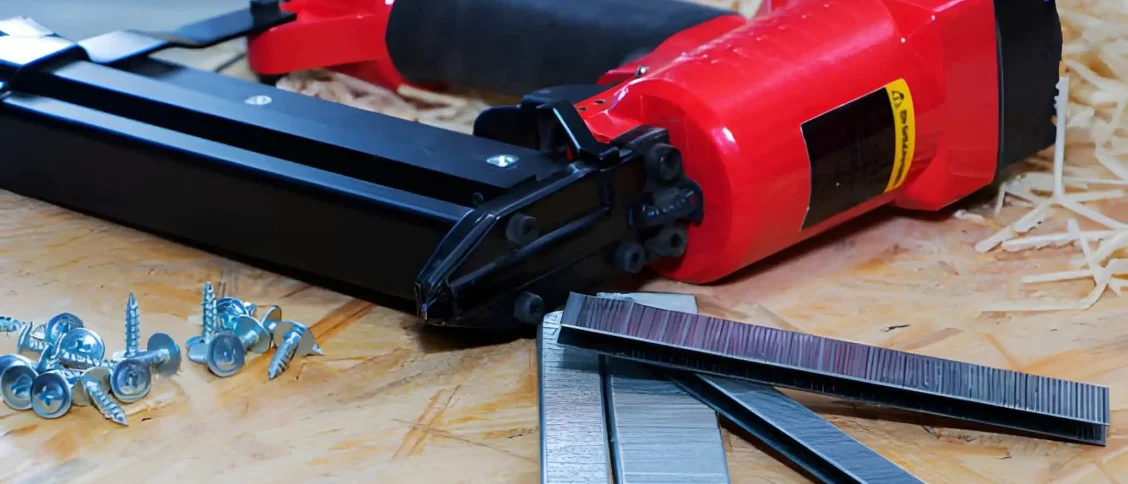
A pin nailer, a lightweight, precisely-driven nail gun, fires ultra-thin 23-gauge headless nails. These pins are perfect for delicate trim work and fine detail when you don’t want to damage wood because they are so tiny that they frequently leave no apparent mark.
Unlike Brad or finish nailers, pin nailers do not have a nail head, so they use glue or other adhesives to permanently secure the piece.
Ideal Applications for Pin Nailers
Pin nailers are perfect for:
- Cabinetmaking
- Picture framing
- Decorative trim and moldings
- Veneers and thin panels
- Furniture trim
When dealing with fragile wood or completing pieces where a smooth appearance is essential, they really shine.
Key Advantages of Pin Nailers
- After nailing, the holes are hardly detectable.
- Excellent for small-scale, decorative projects
- lowers the possibility of wood splitting
- Perfect for fine-tuning carpentry
For long-lasting effects, they work best when combined with adhesive because they lack significant holding ability.
What is a Finish Nailer?
Finish Nailer Mechanism Explained
A finish nailer is a more robust and versatile tool, firing 15- or 16-gauge nails with visible heads. These nails provide stronger holding power, making finish nailers suitable for larger trim and structural woodwork.
These nailers mostly use either straight or angled magazines and are powered by pneumatic pressure, electric batteries, or gas.
Best Use Cases for Finish Nailers
Finish nailers are skilled in
- The crown molding and baseboards.
- Window and door casings
- Trim work that is medium to huge
- Assembling the cabinet
- Railings and staircases
Pros and Cons of Using Finish Nailers
Pros:
- Excellent holding strength
- Versatile across many types of carpentry
- Compatible with hard and soft woods
Cons:
- Creates bigger gaps that must be filled
- It’s not as accurate as pin nailers and a little heavier.
Pin Nailer vs Finish Nailer: Detailed Comparison
- Holding Strength and Nail Size
- Pin Nailer: 23-gauge, headless, low-holding power
- Finish Nailer: 15/16-gauge, headed, high holding power
Winner: Finish Nailer for strength
- Project Type Suitability
- Pin nailers are ideal for fine trim and detail work.
- Finish nailers handle medium to heavy-duty carpentry with ease.
Winner: Tie, based on the project
- Material Compatibility
- Pin nailers work best on softwoods and veneers.
- Finish nailers handle both hardwoods and softwoods efficiently.
Winner: Finish Nailer
- Accuracy and Finish Quality
- Pin nailers provide invisible results; no filler is needed.
- Finish nailers need putty or wood filler to cover nail holes.
Winner: Pin Nailer for aesthetics
- Tool Size, Weight & Ergonomics
- Pin nailers are compact and lightweight, easier to maneuver.
- Finish nailers are bulkier and better suited for two-handed operation.
Winner: Pin Nailer for ease of use
- Cost & Value for Money
- Pin nailers are typically more affordable but limited in scope.
- Finish nailers offer more versatility at a slightly higher cost.
Winner: Depends on use case, but Finish Nailer offers more long-term value
Real-Time Decision Flow: Which Nailer Do You Need Right Now?
This interactive-style section helps readers make a quick choice with a decision tree or checklist:
Ask Yourself:
- Are you working on delicate trim or furniture? → Go with a Pin Nailer
- Do you need a structural hold or trim attachment? → Choose a Finish Nailer
- Concerned about nail visibility? → Pin Nailer is better
- Need to hang heavy trim or baseboards? → Finish Nailer wins
CTA: Still unsure? Read our Tool Guide!
Which One Should You Choose?
For Professional Woodworkers
Having both tools is perfect if you’re working on custom cabinets or a variety of home projects. But for pros, the finish nailer facilitates larger-scale operations and adds more muscle to the table.
For Homeowners & DIY Projects
For smaller decorative projects or crafts, a pin nailer might be all you need. It’s simple, lightweight, and does the job beautifully without marring the finish.
If Budget Is a Concern
If you can only afford one, go for a finish nailer. It’s more versatile and suitable for most general-purpose carpentry work.
Top Rated Pin and Finish Nailers to Buy in 2025
Recommended Pin Nailers
| Brand & Model | Features | Price Range |
| BOSTITCH HP118K | Pneumatic, 23-gauge, durable build | $120-$150 |
| Makita AF353 | Lightweight, compact, high precision | $130-$160 |
| PORTER-CABLE PIN138 | Rear exhaust, narrow nose design | $110-$135 |
Best Finish Nailers in the Market
| Brand & Model | Features | Price Range |
| DEWALT DCN660B | Cordless, brushless motor, 20V battery | $230-$270 |
| Metabo HPT NT65MA4 | Angled, air-powered, depth adjustment | $180-$220 |
| Milwaukee 2742-20 | M18 fuel, tool-free jam release | $250-$290 |
CTA: Compare nailers on Amazon here
Battle-Tested by Pros: Which Nailer Dominates the Jobsite?
Content Suggestion for This Section:
Give a behind-the-scenes look at how professional carpenters and contractors use both tools in real-world conditions:
- Speed Test: Which nailer gets the job done faster?
- Durability Under Pressure: Which survives heavy use on construction sites?
- Maintenance & Jam Frequency: Which tool holds up longer?
CTA: See what top contractors are saying, compare pro-reviews here.
Expert Tips for Safe and Efficient Nailing
- Always wear safety glasses when using either nailer.
- Test nail depth on a scrap before working on your actual piece.
- Use proper air pressure if using a pneumatic model.
- Never bypass the safety trigger or nose guard.
Customer Testimonials: Real-World Use Cases
- “I use my finish nailer for all my trim installs. It’s strong and reliable!” James, Contractor.
- “For delicate picture frames and moldings, the pin nailer is unbeatable.” Sara, DIY Enthusiast
- “Owning both changed my woodworking game. No regrets!” Alex, Cabinetmaker
Where to Buy Quality Nailers Online
- Amazon: Wide range, user reviews, competitive prices
- Home Depot: Trusted brands, in-store pickup available
- Lowe’s: Often runs seasonal discounts on power tools
- ToolBarn: Great for contractor-grade tools
CTA: Ready to upgrade? Browse top-rated nailers here on Amazon.
FAQs- Pin Nailer vs Finish Nailer
- Can I use a pin nailer instead of a finish nailer?
Not recommended. Pin nailers lack the holding power of finish nailers and are suitable for delicate work only.
- Do pin nailers need adhesive?
Indeed. Adhesive helps guarantee a firm hold because it uses headless nails.
- Are finish nailers good for baseboards?
Of course. Baseboards can be firmly held up by their stronger nails.
- Is it worth owning both types of nailers?
Yes, especially if you work on various types of projects, from small trims to structural woodwork.
- What gauge nails are used in pin nailers vs finish nailers?
Pin nailers use 23-gauge nails; finish nailers use 15-16-gauge nails.
- Which is safer to use for beginners?
Pin nailers are generally safer due to their smaller nails and lighter recoil.
Final Verdict: Pin Nailer vs Finish Nailer?
There is no clear winner in the pin nailer vs finish nailer debate. It all depends on the requirements of your project. Use a pin nailer if you’re undertaking intricate, decorative work. A finish nailer is your best option if you require strength and adaptability. And if woodworking is something you take seriously? Obtain both.
Ready to Upgrade Your Nailer Game?
Need precision? Get the top-rated pin nailers here.
Want power and grip? Explore the best finish nailers for 2025.
Don’t miss exclusive online discounts; shop now before they’re gone!