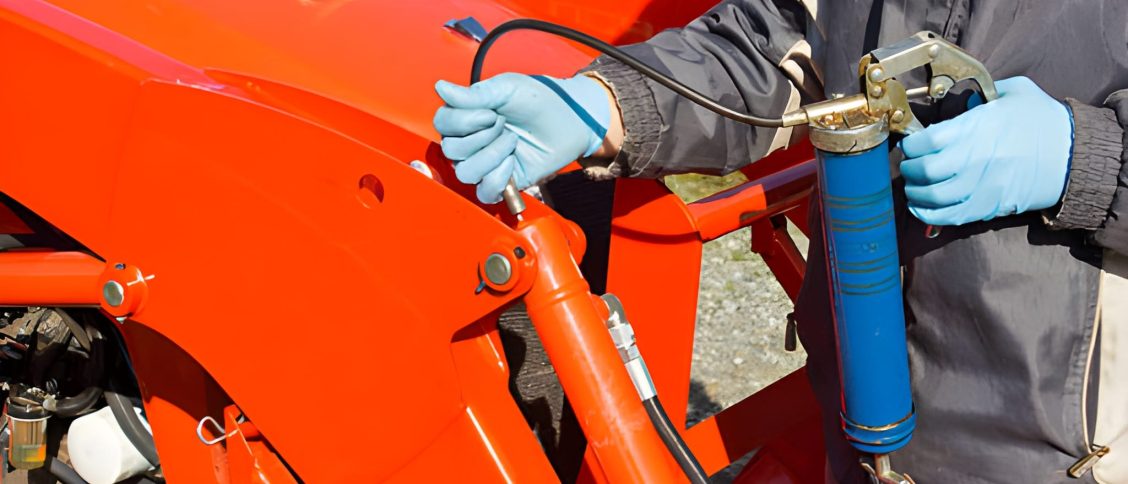

Proper machinery maintenance is the difference between a well-oiled operation and a costly breakdown. At the heart of this maintenance is a simple yet crucial tool: the grease gun. From keeping your car’s chassis lubricated to ensuring heavy industrial equipment runs smoothly, the right grease gun delivers lubricant precisely where it’s needed most.
This guide will walk you through everything you need to know to find the best grease gun for your specific requirements, protecting your investments and preventing premature wear and tear.
Why You Need a Quality Grease Gun
Using a high-quality grease gun isn’t just about convenience; it’s about efficiency, precision, and long-term savings. A substandard tool can lead to messy applications, wasted lubricant, and incomplete lubrication, which can cause friction, overheating, and eventual part failure. Investing in a quality grease gun ensures you can perform this essential maintenance task correctly and confidently.
The primary benefits include:
- Efficiency: A well-designed grease gun delivers lubricant quickly and effectively, reducing the time you spend on maintenance tasks. Cordless and pneumatic models, in particular, can significantly speed up the process, especially when you have numerous grease points to service.
- Precision: Quality grease guns provide excellent control over the amount of grease dispensed. This precision prevents over-lubrication, which can damage seals, and under-lubrication, which leads to component wear. A good coupler and hose system ensures the grease goes directly into the fitting without leaks.
- Durability: Tools used in workshops, garages, and on farms need to be tough. A high-quality grease gun is built from robust materials designed to withstand drops, impacts, and the harsh environment of a workspace. This durability means the tool will last for years, providing a reliable return on your investment.
- Power and Pressure: Some applications, especially those involving heavy machinery, require a high pressure grease gun to push old, hardened grease out of a fitting. A quality tool can generate the necessary PSI to handle stubborn grease points and ensure fresh lubricant fully penetrates the joint.
Ultimately, a reliable grease gun is a cornerstone of proactive maintenance. It empowers you to protect your equipment, extend its lifespan, and avoid the downtime and expensive repairs that come from neglect.
Types of Grease Guns
Grease guns come in several varieties, each suited for different applications, frequencies of use, and user preferences. Understanding the main types is the first step in choosing the right one for your needs.
Manual Grease Guns
Manual grease guns are the most common and traditional type. They are powered by human force and are typically available in two styles:
- Lever-Action: This design requires two hands to operate one to hold the gun and hose steady, and the other to pump the lever. They can generate very high pressure, making them effective for tough jobs. Their two-handed operation can be cumbersome in tight or awkward spaces.
- Pistol-Grip: These guns are designed for one-handed use. You squeeze a pistol-like grip to dispense grease, leaving your other hand free to hold the flexible hose and secure the coupler onto the grease fitting. While they may produce slightly less pressure per stroke than lever guns, their convenience makes them a popular choice for many users, from home mechanics to professionals.
Pneumatic Grease Guns
Pneumatic, or air-powered, grease guns connect to an air compressor. They dispense grease with the simple pull of a trigger, making them incredibly fast and efficient for jobs with many grease points.
They are a staple in professional automotive shops and industrial settings where speed is essential. A pneumatic grease gun provides a continuous flow of grease as long as the trigger is held, which requires some practice to control. They offer excellent power but are tethered to an air hose, limiting their portability.
Cordless (Battery-Powered) Grease Guns
Cordless grease guns offer the best of both worlds: the power and speed of an automated gun with the portability of a manual one. Powered by rechargeable batteries (often interchangeable with other power tools from the same brand), these tools are a game-changer for anyone working in the field.
A cordless professional grease gun can deliver high pressure consistently, making it ideal for a grease gun for heavy machinery and large farm equipment. They are heavier and more expensive than manual models, but the time and effort saved can be substantial.
Mini Grease Guns
As the name suggests, a mini grease gun is a compact, smaller version of a manual grease gun. These are designed for portability and getting into tight spaces where a full-sized gun won’t fit. They hold less grease and typically generate lower pressure, but they are perfect for smaller jobs, DIY projects, or as part of a portable toolkit for on-the-go repairs on ATVs, lawnmowers, or bicycles.
How to Choose the Right Grease Gun
Selecting the best grease gun depends on a careful evaluation of your specific needs. Consider these factors to narrow down your options and find the perfect tool for your workshop or job site.
Pressure Requirements (PSI)
The pressure a grease gun can generate, measured in pounds per square inch (PSI), is a critical factor. Standard applications, like lubricating a car chassis, might only require 3,000 to 4,000 PSI.
However, clogged or corroded fittings on older machinery may demand a high pressure grease gun capable of 8,000 PSI or even 10,000 PSI to force out old, hardened grease and debris. Always check the pressure rating of a gun, especially if you plan to use it as a grease gun for heavy machinery or industrial equipment.
Volume and Frequency of Use
How often will you be using the grease gun, and how many grease points will you service at a time?
- Occasional Use: For a homeowner maintaining a lawn tractor or a car enthusiast doing occasional work, a manual pistol-grip or lever gun is often sufficient and cost-effective.
- Frequent Use: If you are a farmer with multiple tractors, a mechanic, or an industrial maintenance professional, the time savings from a cordless or pneumatic gun will be invaluable. A grease gun for farm equipment needs to be efficient enough to handle dozens of fittings on a single machine.
Portability and Accessibility
Where will you be using the tool?
- In the Shop: If you work primarily in a garage or workshop with an air compressor, a pneumatic grease gun is a powerful and reliable option.
- In the Field: For work on a farm, construction site, or anywhere away from a power source, a cordless model offers unmatched freedom. A portable grease gun is essential for mobile mechanics or anyone servicing equipment in remote locations. For very tight spaces, a mini grease gun might be the only tool that fits.
Loading Method
Grease guns can be loaded in three primary ways:
- Cartridge: This is the cleanest and most common method. You simply insert a pre-filled 14-ounce (or 3-ounce for mini guns) grease tube.
- Suction Fill: You can suck grease directly from a bulk container into the gun’s barrel. This is more economical but can be messy.
- Bulk Loader Pump: For high-volume users, a pump can be used to fill the gun’s barrel directly from a large pail of grease. This is the most cost-effective method for industrial applications.
Ensure the gun you choose supports your preferred loading method. Most support all three, but it’s always good to check.
Build Quality and Ergonomics
A grease gun should feel solid and durable. Look for models with steel barrels and cast-aluminum heads. Ergonomics are also important. A comfortable, non-slip grip will reduce fatigue during extended use. The weight of the tool, especially for cordless models, is another consideration if you’ll be using it for long periods.
Top Picks
Here are our top picks for the best grease guns on the market, covering a range of types and applications to help you find the perfect match.
1. DEWALT 20V MAX Cordless Grease Gun
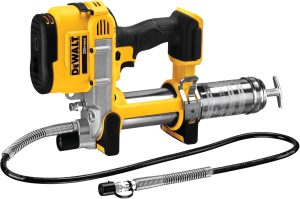
A powerhouse for professionals, the DEWALT 20V MAX Cordless Grease Gun combines mobility with extreme power. It’s the ultimate professional grease gun for those who need to lubricate heavy equipment quickly and efficiently.
Key Features
- Generates up to 10,000 PSI to power through clogged fittings.
- High-volume pump pushes up to 5.0 oz/min for fast application.
- Variable speed trigger for precise grease control.
- 42-inch flexible hose for reaching difficult spots.
- Part of the DEWALT 20V MAX battery ecosystem.
Pros
Cons
2. Lincoln 1162 Pneumatic Grease Gun
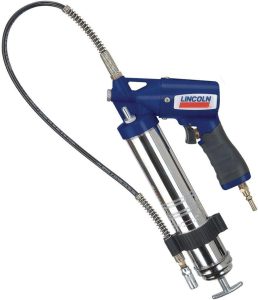
The Lincoln 1162 is an industry-standard pneumatic grease gun known for its reliability and performance in high-volume settings like automotive shops and industrial maintenance facilities.
Key Features
- Fully automatic, continuous operation with trigger pull.
- Up to 6,000 PSI operating pressure.
- Variable speed trigger for flow control.
- Ergonomic design for comfort during prolonged use.
- Advanced pump design eliminates traditional priming issues.
Pros
Cons
3. LockNLube Heavy Duty Pistol Grip Grease Gun
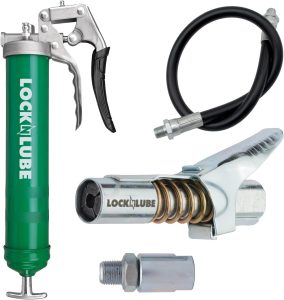
The LockNLube grease gun stands out primarily for its revolutionary locking coupler, which solves one of the most common frustrations with greasing: couplers that leak or pop off under pressure.
Key Features
- Includes the patented LockNLube locking grease coupler.
- Durable pistol-grip design for easy one-handed operation.
- Can be configured for high-pressure or high-volume delivery.
- Includes a 20-inch hose and an in-line hose swivel.
Pros
Cons
4. Bravex 6000 PSI Professional Grease Gun
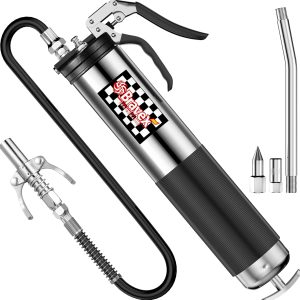
The Bravex 6000 PSI gun is a versatile and powerful manual option that offers a great balance of features and affordability, making it a solid choice for both DIYers and professionals.
Key Features
- Can be operated as a pistol-grip or lever-action gun.
- Delivers up to 6,000 PSI.
- Comes with an 18-inch flexible hose and a rigid extension.
- Features an air-bleeder valve to eliminate air pockets.
Pros
Cons
5. Lumax LX-1152 Deluxe Pistol Grease Gun
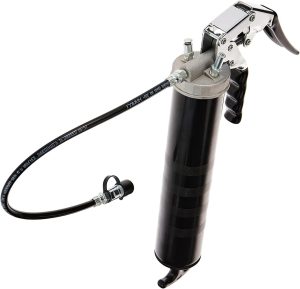
The Lumax LX-1152 is a well-regarded, heavy-duty pistol-grip gun that has been a favorite in garages for years. Its cast-alloy head and solid construction make it a durable and reliable tool.
Key Features
- Develops up to 7,000 PSI.
- Comfortable, oil-resistant grip.
- Includes an 18-inch flexible hose with a spring guard.
- 3-way loading (cartridge, suction, or pump).
Pros
Cons
6. UTOOL 8000 PSI Grease Gun Kit
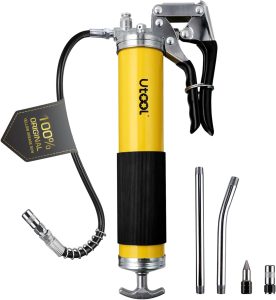
This UTOOL kit is designed for those who need serious power from a manual gun. Marketed as a heavy duty grease gun, it’s built to handle demanding jobs without the expense of a powered model.
Key Features
- Generates up to 8,000 PSI.
- Reinforced barrel and durable plunger assembly.
- The kit includes two couplers, a flexible hose, and a rigid extension pipe.
- Lever-action design for maximum pressure generation.
Pros
Cons
7. STEINBRÜCKE Heavy Duty Pistol Grease Gun
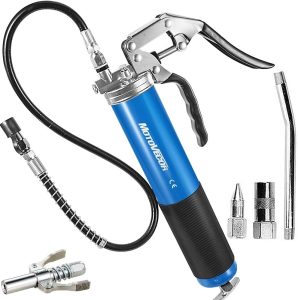
The STEINBRÜCKE grease gun is another strong contender in the pistol-grip category, boasting high pressure and a reinforced build quality suitable for professional use.
Key Features
- Delivers up to 7,000 PSI.
- Reinforced barrel for extra durability.
- Features an easy-to-use air release valve.
- Comes with a flexible hose and two metal extension tubes.
Pros
Cons
8. Thorstone 7000 PSI Heavy Duty Grease Gun Kit
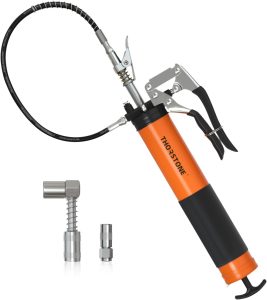
This Thorstone kit offers a complete package for tackling a variety of lubrication tasks. Its lever design provides the leverage needed for high-pressure applications on farm and construction equipment.
Key Features
- Generates up to 7,000 PSI.
- Lever-action design for maximum force.
- Kit includes a flexible hose, rigid tube, and a sharp nozzle for recessed fittings.
- Canister is made with cold-drawn steel for durability.
Pros
Cons
9. KRETLAW Mini 3000 PSI Grease Gun
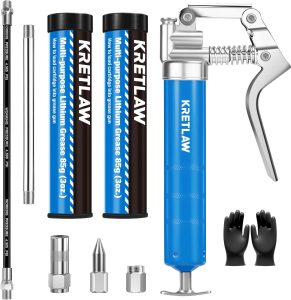
The KRETLAW Mini is the perfect portable grease gun for small jobs and tight spaces. It’s an ideal companion for toolboxes, service vehicles, or for maintaining smaller equipment.
Key Features
- Compact design for superior portability.
- Generates up to 3,000 PSI.
- Uses 3-ounce grease cartridges.
- Includes a flexible hose and rigid extension.
Pros
Cons
10. CARBYNE 3000 PSI Mini Grease Gun
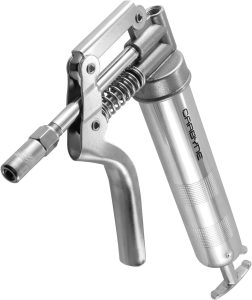
Similar to the KRETLAW, the CARBYNE mini grease gun offers convenience and portability. It’s a well-built tool that’s perfect for hobbyists and for quick, on-the-spot lubrication needs.
Key Features
- Delivers up to 3,000 PSI.
- Anodized aluminum head for lightweight durability.
- Pistol-grip design for easy one-handed use.
- Comes with a rigid extension and a standard coupler.
Pros
Cons
How to Use a Grease Gun Step-by-Step
Using a grease gun is straightforward once you know the process. Following these steps will ensure a clean, effective, and safe lubrication job.
Step 1: Load the Grease Gun
First, you need to load your grease gun. If you’re using a cartridge:
- Unscrew the head of the grease gun from the barrel.
- Pull the plunger rod at the bottom of the barrel all the way back and lock it in its slot.
- Remove the plastic cap from the new grease cartridge. Keep the metal pull-tab end intact.
- Insert the cartridge, open end first, into the barrel.
- Remove the metal pull-tab seal from the cartridge.
- Screw the head back onto the barrel. Don’t tighten it all the way yet.
Step 2: Prime the Gun (Remove Air Pockets)
Air trapped in the gun will prevent it from pumping grease. To prime it:
- Release the plunger rod from its locked position so it applies pressure to the cartridge.
- Slightly unscrew the gun head (about half a turn) to allow trapped air to escape.
- If your gun has an air bleeder valve, press it until grease starts to seep out.
- Pump the lever or handle until you feel resistance and grease begins to flow from the nozzle.
- Once grease is flowing, tighten the head assembly completely.
Step 3: Prepare the Grease Fitting
Locate the grease fitting (also called a zerk or nipple) on the equipment you are servicing. Use a clean rag to wipe away any dirt, debris, or old grease from the fitting. This prevents contamination from being forced into the joint
Step 4: Attach the Coupler
Push the coupler at the end of the grease gun’s hose or pipe straight onto the grease fitting. You should feel it “click” or snap into place. Ensure it is seated firmly and squarely to prevent leaks during pumping.
Step 5: Pump the Grease
Begin pumping the grease gun’s lever or handle. Watch the joint you are lubricating.
- How much grease? For sealed joints, pump slowly until you see the rubber boot on the joint begin to swell slightly. For unsealed joints, pump until you see fresh grease begin to push out the old grease. Refer to your equipment’s service manual for specific recommendations.
- Feel the pressure. If the handle is extremely hard to pump, the fitting may be clogged. A high-pressure gun can often clear it. If not, the fitting may need to be replaced.
Step 6: Detach the Coupler
Once you’ve applied enough grease, tilt the coupler slightly to the side and pull it off the fitting. If it’s stuck, a slight twist-and-pull motion can help. Avoid yanking it straight off, as this can damage the fitting or the coupler.
Step 7: Clean Up
Wipe any excess grease from the fitting and the coupler with a rag to keep the area clean and prevent dirt from accumulating.
Maintenance & Troubleshooting
A well-maintained grease gun will provide years of reliable service. Here are some tips for keeping your tool in top shape and solving common problems.
Regular Maintenance
- Keep it Clean: After each use, wipe down the exterior of the gun and the hose to remove dirt and excess grease. This prevents contaminants from getting into your equipment.
- Inspect the Hose and Coupler: Regularly check the flexible hose for cracks, bulges, or leaks. Inspect the coupler to ensure its jaws are not worn. A worn coupler will not grip fittings securely and will lead to leaks.
- Store it Properly: Store your grease gun horizontally or with the pump head down to prevent air from getting into the system. Engage the plunger lock to take pressure off the grease when not in use for long periods.
- Use the Right Grease: Always use the type of grease recommended by the equipment manufacturer. Mixing different types of grease can reduce their effectiveness.
Common Troubleshooting Issues
- Gun Won’t Pump Grease: This is almost always caused by an air pocket. Try re-priming the gun using the steps outlined above. Check that the follower plate inside the barrel is not stuck.
- Leaking Coupler: If grease is leaking around the fitting during pumping, the coupler is either not attached correctly, it’s worn out, or you are trying to force grease into a completely blocked fitting. Try reseating the coupler. If it still leaks, it may be time to replace it. A locking coupler like the LockNLube can solve this problem permanently.
- Grease Leaking from the Barrel Threads: This usually means the head was not tightened sufficiently after loading a new cartridge, or the O-ring or threads are damaged. Tighten the head, and if the leak persists, inspect the threads and seals for damage.
- Handle is Stuck or Hard to Pump: This could indicate a clogged grease fitting, a blockage in the hose or coupler, or hardened grease inside the gun itself. Try using the gun on a known good fitting to diagnose the issue.
Conclusion
A grease gun is an indispensable tool for anyone who owns or operates machinery. Whether you’re a home mechanic working on your car, a farmer maintaining a fleet of tractors, or an industrial technician keeping a factory running, the right grease gun makes a world of difference.
By understanding the different types available from the simple and effective manual models to the powerful and efficient cordless and pneumatic options—you can make an informed decision. Consider your specific needs regarding pressure, portability, and frequency of use.
A heavy duty grease gun like the DEWALT cordless model might be perfect for a professional, while a versatile manual pistol-grip gun like the Lumax or LockNLube is an excellent choice for a wide range of users. For tight spaces and portability, a mini grease gun is an invaluable addition to any toolkit. Investing in a quality tool and using it correctly is a fundamental part of a proactive maintenance strategy.
It will save you time, reduce waste, and, most importantly, protect your valuable equipment for years to come. Choose the right grease gun, keep your machinery well-lubricated, and enjoy the peace of mind that comes with a job well done.