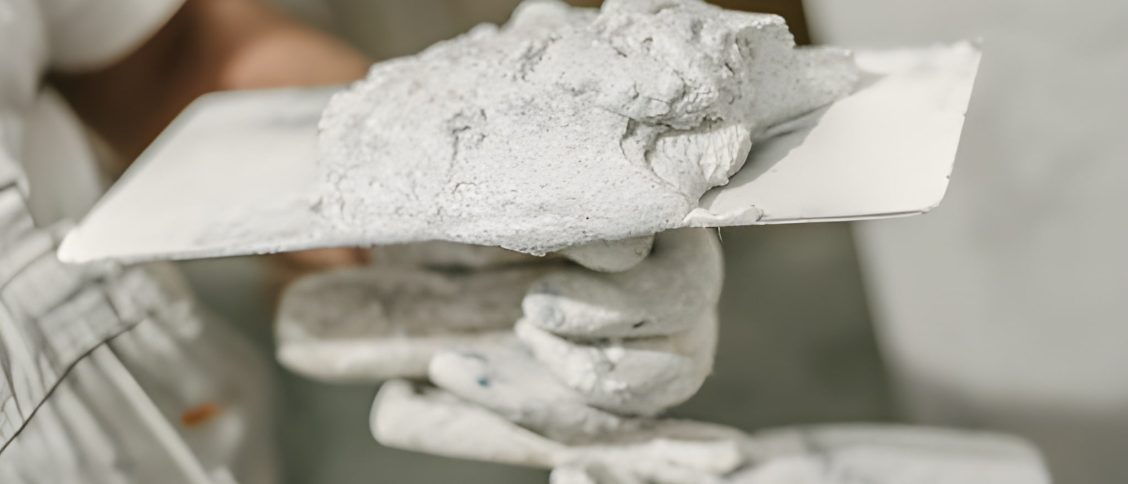

Concrete and cement surfaces are the foundation of many homes and businesses. From driveways and garage floors to basements and patios, these surfaces endure constant wear and tear. Left unprotected, they are vulnerable to staining, cracking, and damage from moisture, chemicals, and abrasion.
A high-quality cement sealer is the ultimate line of defense, preserving both the integrity and appearance of your concrete for years to come. Cement sealers are chemical solutions that create a protective barrier on or within concrete surfaces. They prevent the penetration of water, oils, and other contaminants that can cause deterioration. By sealing your cement, you not only extend its lifespan but also enhance its look, making it easier to clean and maintain.
This guide is for homeowners, DIY enthusiasts, and property managers who want to protect their investment. Whether you need a robust concrete driveway sealer to withstand vehicle traffic or a specialized basement floor sealer to block moisture, choosing the right product is essential. This comprehensive guide will walk you through everything you need to know. We’ll explore the different types of sealers, highlight key features to look for, and provide in-depth reviews of the top 10 best cement sealers on the market.
Types of Cement Sealers
Understanding the different types of cement sealers is the first step toward making an informed choice. Sealers are generally categorized into two main groups: film-forming sealers and penetrating sealers. Each has distinct properties and is suited for different applications.
Film-Forming Sealers
As the name suggests, film-forming sealers create a protective layer on top of the concrete surface. This film acts as a barrier, preventing water and contaminants from seeping in.
They are often chosen for their ability to enhance the appearance of concrete, providing a gloss or “wet look” finish. Film-forming sealers are a popular choice for decorative concrete and areas where aesthetics are a priority.
There are three primary types of film-forming sealers:
- Acrylic Sealers: These are the most common type of film-forming sealer. They are easy to apply, affordable, and provide good protection against moisture and chlorides. Acrylics are available in both water-based and solvent-based formulas. Water-based acrylics have low VOCs (Volatile Organic Compounds) and are easier to clean up, while solvent-based acrylics offer better adhesion and a higher gloss finish. They are a great choice for a decorative concrete sealer on stamped or colored concrete.
- Epoxy Sealers: Epoxies form a hard, durable, and long-lasting protective film. They offer excellent resistance to abrasion, chemicals, and water. This makes them an ideal garage floor concrete sealer, where surfaces are exposed to hot tires, oil spills, and heavy foot traffic. They are typically two-component systems that need to be mixed before application.
- Urethane Sealers: Urethanes are often used as a topcoat over an epoxy base. They are highly durable and offer superior resistance to chemicals and abrasion compared to epoxies. They are also more flexible and UV-stable, meaning they won’t yellow when exposed to sunlight. This makes them suitable as an outdoor cement sealer.
Penetrating Sealers
Penetrating sealers work differently. Instead of forming a film on the surface, they soak into the pores of the concrete and react chemically to form a hydrophobic (water-repellent) barrier.
This barrier is breathable, allowing moisture vapor to escape from within the concrete, which helps prevent issues like spalling (flaking) caused by freeze-thaw cycles. Because they don’t form a surface film, they do not change the appearance or slip resistance of the concrete.
The main types of penetrating sealers include:
- Silane Sealers: Silanes have very small molecules, allowing them to penetrate deeply into dense concrete. They provide excellent water repellency and are highly effective at protecting against freeze-thaw damage and de-icing salts.
- Siloxane Sealers: Siloxanes have larger molecules than silanes, so they don’t penetrate as deeply. However, they are still very effective at repelling water and are often more economical. They are a fantastic option for a wide range of applications, including driveways and patios.
- Silicate Sealers (Densifiers): Silicates, such as sodium or lithium silicate, penetrate the concrete and react with the calcium hydroxide to form a crystalline structure within the pores. This process densifies and hardens the concrete, increasing its strength and resistance to abrasion. They are often used as an industrial concrete sealer in warehouses and commercial settings to reduce dusting and improve durability.
Key Features to Consider When Choosing a Sealer
With so many options available, selecting the right cement sealer can feel overwhelming. Consider these key features to narrow down your choices and find the perfect product for your project.
- Application Location (Interior vs. Exterior)
Where will you be using the sealer? For outdoor applications like a concrete driveway sealer, you need a product with excellent UV stability to prevent yellowing and degradation from sunlight. Urethanes and many penetrating sealers are great for outdoor use. For indoor areas like basements or garages, VOC levels are a major concern. A water-based, low-VOC sealer is often the safer choice for a basement floor sealer.
- Desired Finish
Do you want to maintain the natural look of your concrete, or do you prefer a glossy, “wet look”? Penetrating sealers will not alter the appearance of your surface. Film-forming sealers, like acrylics and urethanes, will provide a sheen ranging from satin to high-gloss.
- Level of Protection Needed
Consider what you are trying to protect your concrete from. In a garage, you need protection from oil, gasoline, and hot tire pickup. An epoxy or urethane system is best. For a driveway in a cold climate, you need protection from de-icing salts and freeze-thaw cycles, making a penetrating silane/siloxane sealer a top contender. For an industrial concrete sealer, abrasion resistance and dust-proofing from a silicate densifier might be the priority.
- Breathability
In many situations, it’s crucial that the sealer allows moisture vapor to escape from the concrete. This is especially true for outdoor slabs and basement floors where moisture from the ground can travel up through the concrete. Penetrating sealers are inherently breathable. Some film-forming sealers are also breathable, but many are not. Trapping moisture can lead to sealer failure, bubbling, and damage to the concrete itself.
- Ease of Application
Some sealers, like single-component water-based acrylics, are very DIY-friendly and can be applied with a simple roller or sprayer. Others, like two-part epoxies and urethanes, require precise mixing and have a limited pot life, making them more challenging for beginners.
- Durability and Lifespan
How often do you want to reapply the sealer? Acrylic sealers typically need to be reapplied every 1-3 years. High-performance epoxies and urethanes can last 5-10 years or more. Penetrating sealers can last for 10 years or longer because they are inside the concrete and cannot be worn away by traffic.
Top 10 Best Cement Sealers
After extensive research and analysis, we’ve compiled a list of the top 10 cement sealers. This review covers a range of types and applications to help you find the best solution for your specific needs.
Best for a Glossy “Wet Look” Finish
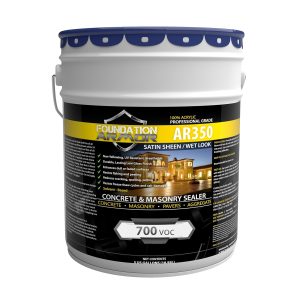
1. Foundation Armor AR350 Solvent-Based Acrylic Sealer
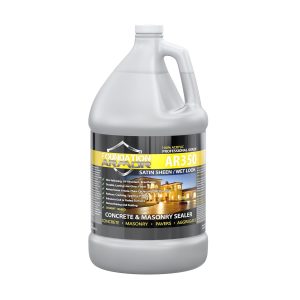
Foundation Armor is a well-respected name in the concrete coatings industry, and their AR350 sealer is a standout product. This solvent-based acrylic sealer is designed to enhance and protect a variety of concrete surfaces, providing a stunning wet-look, high-gloss finish that darkens the concrete to bring out its color.
Key Features
- Creates a durable, non-yellowing high-gloss finish.
- Made from non-recycled US-manufactured resins.
- Breathable film allows moisture to escape.
- Can be applied to both cured and freshly poured concrete.
- Reduces damage from water absorption, freeze-thaw cycles, and salts.
Pros
Cons
Best for Maximum Water Repellency
2. Siloxa-Tek 8500 Penetrating Concrete Sealer
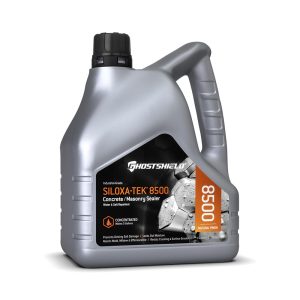
When you need uncompromising protection without changing your concrete’s appearance, Siloxa-Tek 8500 is an industry-leading choice. This is a high-performance, commercial-grade silane/siloxane blend that penetrates deep into the concrete to provide a robust, hydrophobic barrier. It’s a go-to for protecting driveways, sidewalks, and patios from water and salt damage.
Key Features
- Advanced silane/siloxane blend for deep penetration.
- Provides up to 95% water repellency.
- Does not change the look or texture of the concrete.
- Breathable, allowing trapped moisture to escape.
- Protects against freeze-thaw damage and de-icing salts.
Pros
Cons
Best for Densifying and Waterproofing
3. Ghostshield Lithi-Tek 9500 Concrete Sealer
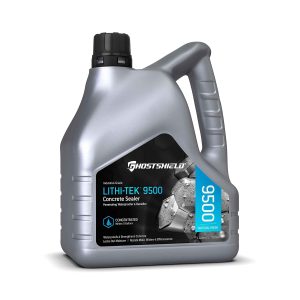
Ghostshield’s Lithi-Tek 9500 offers a unique two-in-one solution. It’s a penetrating sealer that combines lithium silicate densifiers with silane/siloxane water repellents. This means it not only waterproofs your concrete but also permanently hardens it from the inside out. It’s an exceptional choice for garage floors, warehouse floors, and basements.
Key Features
- Hybrid technology densifies, hardens, and waterproofs.
- Increases surface abrasion resistance.
- Reduces concrete dusting.
- Penetrates up to 2 inches for permanent protection.
- Invisible finish that maintains the natural look.
Pros
Cons
Best Budget-Friendly Option
4. Quikrete Concrete & Masonry Waterproofing Sealer
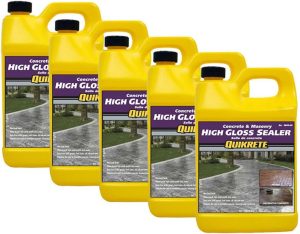
For homeowners looking for a reliable and affordable waterproofing solution, Quikrete’s Waterproofing Sealer is a solid choice. This is a silicone-based, water-repellent sealer that penetrates the surface to protect against water damage. It’s easy to find at most home improvement stores and is very user-friendly.
Key Features
- Silicone-based formula for water repellency.
- Dries to a natural, invisible finish.
- Low-odor, water-based formula.
- Suitable for a variety of surfaces including concrete, brick, and stucco.
Pros
Cons
Best Water-Based Wet Look Sealer
5. Drylok Wetlook Concrete Sealer
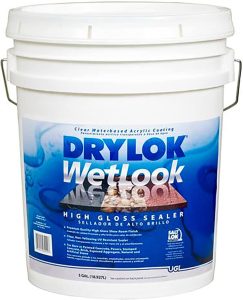
If you want the aesthetic appeal of a “wet look” sealer without the high VOCs and strong smell of a solvent-based product, Drylok Wetlook is an excellent alternative. This is a water-based acrylic sealer that provides a durable, high-gloss finish, making it a great decorative concrete sealer.
Key Features
- Water-based acrylic formula with a high-gloss, “wet look” finish.
- Non-yellowing and resistant to UV damage.
- Low odor and easy soap-and-water cleanup.
- Resists damage from salt, acids, and alkalis.
Pros
Cons
Best for All-Purpose Protection
6. TuffCrete Concrete Sealer
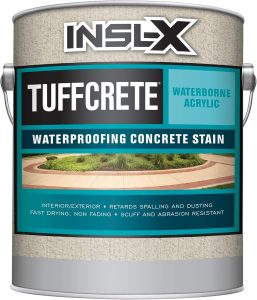
If you want the aesthetic appeal of a “wet look” sealer without the high VOCs and strong smell of a solvent-based product, Drylok Wetlook is an excellent alternative. This is a water-based acrylic sealer that provides a durable, high-gloss finish, making it a great decorative concrete sealer.
Key Features
- Penetrating formula that does not form a film.
- Protects against water, salt, and freeze-thaw damage.
- Maintains the natural, non-slip texture of the concrete.
- Concentrated formula can be diluted to cover a large area.
Pros
Cons
Best for Extreme Durability and Chemical Resistance
7. Eagle Armor Seal Urethane Sealer
When you need the absolute toughest protection, a urethane sealer is the answer. Eagle Armor Seal is a two-component aliphatic urethane that provides a durable, chemical-resistant, and UV-stable finish. It’s often used in high-traffic commercial environments and is an ultimate upgrade for a garage floor concrete sealer.
Key Features
- Two-component aliphatic urethane formula.
- Exceptional resistance to chemicals, oil, and gas.
- Creates a very hard, abrasion-resistant gloss finish.
- UV-stable, so it will not yellow or fade outdoors.
Pros
Cons
Best Basement Floor Sealer
8. RadonSeal Plus Deep Penetrating Concrete Sealer
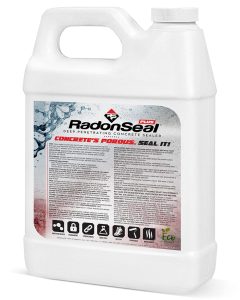
As its name implies, RadonSeal is specially formulated to seal concrete from below-grade moisture and even radon gas. It’s a deep-penetrating silicate sealer that works by reacting with the concrete to create a permanent barrier deep within the pores. This makes it the premier choice for a basement floor sealer.
Key Features
- Deep-penetrating silicate formula.
- Specifically designed to seal against water seepage and radon gas.
- Permanently hardens and densifies the concrete.
- Leaves no film and has zero VOCs.
Pros
Cons
Best for Interior Decorative Concrete
9. Black Diamond Stoneworks Wet Look Sealer
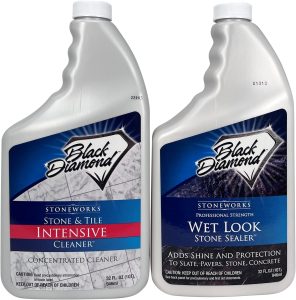
Black Diamond Stoneworks is known for its specialty stone and concrete care products. Their Wet Look Sealer is a water-based urethane/acrylic blend designed to provide a durable, gloss finish for interior surfaces. It’s particularly popular for stained concrete floors, countertops, and decorative panels.
Key Features
- Water-based urethane/acrylic formula.
- Creates a durable, long-lasting wet-look shine.
- Low-odor and easy to apply.
- Resists scuffs, scratches, and stains.
Pros
Cons
Best Pure Acrylic Sealer
10. EnduraSeal 100% Acrylic Concrete Sealer
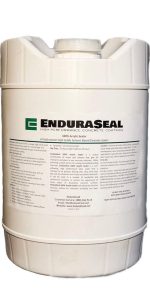
EnduraSeal’s 100% Acrylic Concrete Sealer is a professional-grade, solvent-based acrylic that offers a balance of aesthetics and protection. It’s formulated with high-quality, pure acrylic resins, which provide better durability and clarity than cheaper “styrene-acrylic” blends. It’s a reliable choice for an outdoor cement sealer on patios and pool decks.
Key Features
- Made from 100% pure acrylic resins for superior performance.
- Available in different sheen levels (Satin to Gloss).
- Non-yellowing and UV-resistant.
- Provides a durable, wet-look finish.
Pros
Cons
Comparison Table of Top 10 Cement Sealers
| Product | Type | Finish | VOC Level | Best Use |
| Foundation Armor AR350 | Solvent-Based Acrylic | High-Gloss Wet Look | High | Decorative Concrete, Patios |
| Siloxa-Tek 8500 | Penetrating (Silane/Siloxane) | Invisible / Natural | Low | Driveways, Walkways (Water Repellency) |
| Ghostshield Lithi-Tek 9500 | Penetrating (Silicate/Silane) | Invisible / Natural | Ultra-Low | Garages, Basements (Hardening) |
| Quikrete Waterproofing Sealer | Penetrating (Silicone) | Invisible / Natural | Low | Budget DIY Projects |
| Drylok Wetlook Sealer | Water-Based Acrylic | High-Gloss Wet Look | Low | Interior Decorative Concrete, Patios |
| ToughCrete Sealer | Penetrating | Invisible / Natural | Low | All-Purpose Residential/Commercial |
| Eagle Armor Seal | Two-Part Urethane | High-Gloss | High | Industrial Floors, Garages (Durability) |
| RadonSeal Plus | Penetrating (Silicate) | Invisible / Natural | Zero | Basement Floors, Walls (Moisture Blocking) |
| Black Diamond Wet Look | Water-Based Urethane/Acrylic | Gloss | Low | Interior Floors, Countertops |
| EnduraSeal 100% Acrylic | Solvent-Based Acrylic | Satin to Gloss | High | Pool Decks, Stamped Concrete |
How to Apply Cement Sealer: A Step-by-Step Guide
Proper application is just as important as choosing the right sealer. Following these steps will ensure you get a professional, long-lasting finish.
Step 1: Surface Preparation (The Most Important Step!)
The sealer can only perform as well as the surface it’s applied to.
- Clean: The concrete must be completely clean. Use a pressure washer or a concrete degreaser to remove all dirt, oil, efflorescence, and existing failed coatings.
- Repair: Fill any cracks or holes with a suitable concrete patching compound. Allow the repairs to fully cure according to the manufacturer’s instructions.
- Etch (If Necessary): Very smooth, machine-troweled concrete (like many garage or basement floors) may need to be acid-etched. This opens up the pores of the concrete, allowing the sealer to properly bond or penetrate. Always follow safety precautions when working with acid.
- Dry: The concrete must be completely dry. Wait at least 24-48 hours after cleaning or rain before applying a sealer. For penetrating sealers, some moisture may be acceptable, but always check the product’s specific instructions.
Step 2: Check the Weather
Plan your project for a day with mild, dry weather. Most sealers require an application temperature between 50°F and 90°F. Avoid applying in direct sunlight or on hot surfaces, as this can cause the sealer to dry too quickly and create bubbles or streaks.
Step 3: Gather Your Tools
You will typically need:
- The cement sealer
- A pump-up garden sprayer or a solvent-resistant sprayer (for penetrating sealers and thin-bodied acrylics)
- A 3/8″ nap roller (for film-forming sealers)
- A roller frame and extension pole
- A paint tray
- Safety glasses, gloves, and a respirator (especially for solvent-based products)
Step 4: Application
Always read and follow the specific instructions on the product label.
- For Penetrating Sealers: The best method is usually a low-pressure sprayer. Apply a saturating coat, ensuring even coverage. The goal is to have the concrete absorb the sealer until it is full. If puddles form, use a roller or broom to spread them out. Some products may recommend a “wet-on-wet” second coat.
- For Film-Forming Sealers: Start by “cutting in” the edges with a brush. Then, use a roller to apply a thin, even coat to the main area. Work in manageable sections and maintain a wet edge to avoid roller marks. Do not over-apply, as thick coats can lead to cloudiness and peeling. Two thin coats are always better than one thick coat.
Step 5: Curing
Let the sealer dry and cure completely. Keep foot traffic off the surface for at least 4-6 hours and vehicle traffic off for at least 24-72 hours. Full cure and maximum protection can take up to a week. Protect the area from rain and moisture during this time.
Maintenance Tips for Sealed Surfaces
Once your concrete is sealed, a little maintenance will keep it looking great for years.
- Regular Cleaning: Sweep the surface regularly to remove abrasive dirt and debris. Wash periodically with a pH-neutral cleaner and water. Avoid using harsh acidic or alkaline cleaners, as they can damage the sealer.
- Spill Cleanup: Clean up spills, especially oil, gas, and other chemicals, as soon as possible. Even the best sealers have their limits.
- Inspect Annually: Check your sealed surface once a year for any signs of wear or failure. A simple test is to sprinkle some water on the surface. If it beads up, the sealer is still working. If it soaks in and darkens the concrete, it’s time to reapply.
- Reapplication: Follow the manufacturer’s guidelines for reapplication. For acrylic sealers, this is typically every 1-3 years. Before reapplying a film-forming sealer, you may need to clean the surface thoroughly or, in some cases, strip the old sealer. Penetrating sealers are easier to reapply, as you are simply topping up the protection within the concrete.
Conclusion
Protecting your concrete surfaces with a high-quality cement sealer is one of the smartest investments you can make for your property. It not only safeguards against costly damage from water, chemicals, and abrasion but also enhances the beauty and value of your home or business.
From the deep-penetrating protection of Siloxa-Tek 8500 to the brilliant gloss of Foundation Armor AR350 and the industrial-strength hardening of Ghostshield Lithi-Tek 9500, there is a perfect product for every need.
By understanding the different types of sealers and carefully considering your specific application—whether it’s an outdoor cement sealer for your patio or a robust industrial concrete sealer for your workshop—you can choose a product that will deliver lasting results. Take the time to prepare your surface properly and apply the sealer correctly, and you will enjoy a durable, attractive, and easy-to-maintain concrete surface for many years to come.