If you’re a woodworker or carpenter, you might have wondered how to use a circular saw when you don’t have a table saw. Circular saws are handy tools for cutting and shaping wood. However figuring out how to use them effectively without a table can feel really challenging at the beginning.
Worry not; we’ve got your back! In this blog post, you’ll find all the steps necessary to correctly use your circular saw by skipping the drill press with ease. Additionally, help us learn more by sharing your tips in the comments section below after giving it a shot yourself. Let’s dive right in!
Using A Circular Saw Without A Table?
Circular saws are essential equipment for any woodworker. The saw is frequently employed as an auxiliary tool for the cutting and finishing of plywood. You certainly have seen some woodworkers with a circular saw installed on a desk and you have definitely decided to use this circular saw exclusively on a table.
Nevertheless, it’s often necessary to cut without a table. So it is advisable to know how to cut circular saws. The circular saws are useful instruments for cutting longboards, dimensioning timber or foam sheet and sheet goods.
Often the woodworker lays up plywood on the table and pushes the circular saw into the wood.
Can a Circular Saw Replace a Table Saw?
If you have the proper skill to use it correctly, the circular saw can replace table saws. Nevertheless the time needed for acquiring the skills and expertise makes the cost for a table saw seem insignificant in comparison.

Although circular saws and table saws have similar design, circular saws and table saws use only woodworking, while circular saws use general construction, woodworking, and other professions. While a circular saw may have less ease of operation than the table saw, you can easily cut almost as precisely.
Circular saws are similar to a table saw and utilize various blade types depending upon the product.
First Method to Use a Circular Saw Without a Table
It is likely the best way of using circular saws without tables. I think it’s really a simple one. To start with pressure treated plywood or a similar material that has high moisture you should be prepared for it. Please use a circular saw specially for pressure-treated wood.
This saw features a nonstick coated surface to prevent wear and damage to the blades. The edge guide can be attached to a saw. It helps make straight edge cuts between places. Then, the blade depth is precise.
The depth must be properly adjusted in order to cut the blade guard smoothly. Typically, one quarter inch should be sufficient.
1. Suitable Plywood Blades
The longer the teeth, the more smooth the cuts are. It is assumed the blades are sharp. Depending on how sharp they look they are seven to four inches. A circular saw Blade will produce smooth ripped cuts (paralleled to grain) in plywood.
A lot of the teeth are smoother. The disadvantage of the 140 mm plywood blade is that it dulls teeth much more quickly than the teeth of the 3 Carbide slits. The same goes for particleboard cutting. It’s a 40-point carburet blade I prefer. I’m using a reserve only if the cut is necessary.

2. Double Check the Cut
Nick it up, turn off the saw and measure it out for exact cuts. Let’s make a little adjustment. Draw two inches of pencil. Long marking the size you want. It was dark for photographic clarity. Start the saw and pull the plate into the guide and scrape up the plywood.
Always rotate the blade before touching the wood; otherwise the blades will splinter. Measure to its edges for a better measure. If you must change your guide slightly, adjust both ends for straight cuts. Do not be upset. Immediately check for correct positioning of the guide and guide.
3. Set the Blade Depth
Proper depth sets are expected to result in smooth cuts that have less sawtooth marks. Adjust your knife’s depth so no more than one carbide tooth can be found underneath plywood (photo). It might seem unnoticeably complicated, but blade depth can significantly affect your final outcome.
The teeth will cut the wood and reduce the vibration of its blade if needed. This is done by avoiding saw teeth stains. The deeper the blade is, the greater the marking. Position the saw along plywood edges, lift the guards to look carefully. This is also a good time to examine your knife to check for your broken teeth.
4. Make Circular Saw Cuts Clean
Family Handyman. Let us show you how to cut large plywood with a knife the easiest way. Your circular saw can be cut as easily as the table saws. Cuts should be clean that you Don’t Have to Sand or Touch Up the Plywood Edges
5. Measure the Base Plate
Measure the distance between edges of a blade. You can purchase straight edge tools from home centers and hardware stores, and for longer cuts I usually use the manufacturing cut on 3/4-inch strips. Plywood.
The factory edge is normally very straight. A third is inserted. Thick plywood lies flat and remains rigid for a minimum length of 12 inches.

Large. The end has to be clamped up. There are some challenges with clamping them into their desired place for a perfectly straight cut. Measure the distance between your saw base and blade in a phgrapotoh.
6. Using Sawhorses
Sawhorses provide good supporting structures when cutting in circular saws. I’m describing this procedure using saw horses. I crafted it from a wood I had leftover from an online free plan I had.
Although I own a desk, I think saw horses are really valuable if I want to protect my workspace and not risk ripping large sheets from my desk.
These seats are sturdy and comfortably comfortable when cutting wood. Place the cutting material in the saws and place it on the horse. Balance it correctly and prevent any rippling. Before cutting you should mark your cutline.
7. Circular Saw Safety Guidelines
A minute of disorientation may lead to fatal injuries. For a safe and effective outcome you must follow safety guidelines and procedures.
Those are some examples that can be used below. Always keep your eyes and ears covered. These items make up our Protection Equipment.
- Upon starting a new job you must make sure the appropriate security measures are taken.
- It is necessary to use razor-sharp knives to avoid the possibility of injury to the body or of the blades.
- When using corded saws, it is imperative to keep cable out of work. The recommended tool should be circular sawing using cordless.
Related: How to Unlock a Craftsman Miter Saw?
How do you Use a Circular Saw Without Kickback?
The first step in using a circular saw without kickback is to stabilize the material you are cutting. This can be done by clamping it down or having someone help you hold it in place. Make sure your cut line is clearly marked and in the right direction so that you won’t drift off track.
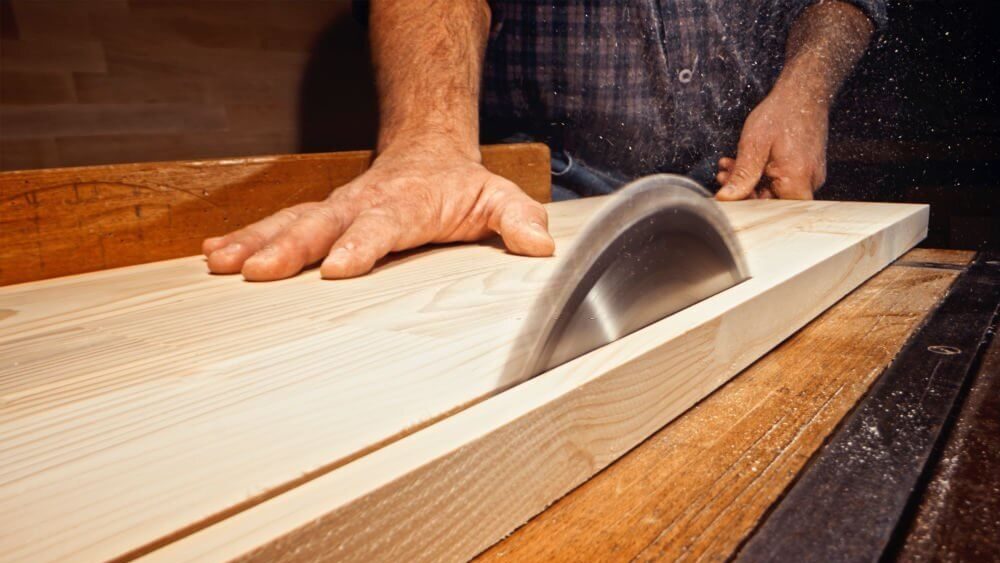
Next, check that all safety guards are in place, and that your blade is sharp and properly aligned. When cutting, make sure to apply steady pressure, not too much or too little, as this can cause kickback. While sawing through the material, keep the front of the saw pressed firmly against it throughout the cut.
Finally, when you’re done using a circular saw, make sure to use a brush or vacuum cleaner to clean off any dust before storing it away. By following these safety steps, you can greatly reduce the risk of kickback while using your circular saw.
How do you Cut Plywood with a Circular Saw Without Splintering?
To cut plywood without splintering, make sure to use a circular saw with sharp, carbide-tipped blades. Ensure the saw blade is set at full depth and perpendicular to the surface of the plywood. To minimize chipping, it’s best to start your cut from the back side of the plywood instead of the front.
Additionally, you can apply a thin layer of masking tape to the cut line before making your cut; this will help reduce splintering on the edges.
Finally, when cutting plywood, take your time and make sure to keep the saw steady and in control as you make the cut. Doing so will ensure that you get a clean, splinter-free cut.
When using a circular saw on plywood, always wear protective eyewear and follow basic safety precautions. Following these simple tips will help you achieve precise and splinter-free cuts every time.
By following these tips, you’ll be able to use your circular saw to quickly and accurately cut plywood without any splintering or chipping.
Can you Cut Foam Insulation?
Yes, you can cut foam insulation. There are a few different ways to do this depending on the size and type of foam insulation that you are working with.
For large pieces of foam, it is usually best to use a power saw such as a jigsaw or circular saw, while for smaller pieces of foam, a craft knife or utility knife may be more effective.

If you are looking for a clean, precise cut, the best option is to use a hot wire foam cutter, which uses an electrically heated wire to quickly and efficiently cut through the insulation. Be sure to wear protective gear such as goggles, gloves and a respirator when using power tools or heat-based cutting tools.
No matter what method you use, you should always take the necessary safety precautions when cutting foam insulation and wear proper protective gear.
Follow all instructions carefully in order to ensure that your project is done safely and effectively. Taking a few extra minutes to prepare and plan can make a big difference in your end result!
Conclusion
In short, when using a circular saw without a table, safety is the most important thing. You need the correct blades and tools for cutting, wear the right protective gear, and be in the right place to prevent accidents.
It may look daunting at first but with patience and practice you will soon master using a circular saw without a saw bench. Finally, remember that having some kind of support structure or base when necessary is essential for making precise cuts while working with this piece of machinery.
Taking all of these tips into consideration should enable you to use your circular saw safely, efficiently and productively without needing a dedicated table surface – just be sure to heed any warnings that come with your particular saw model.