
Achieving a flawless, glass-smooth finish on a piece of furniture is one of the most satisfying parts of woodworking. Whether you’re building a new heirloom or breathing life into an old favorite, the quality of your sanding job makes all the difference.
It’s the critical step that prepares the wood to accept stain or paint evenly, removes imperfections, and ultimately defines the final look and feel of your project. Skipping or rushing this process is a recipe for a blotchy, uneven, and unprofessional result.
Using the right sander is not just about aesthetics; it’s about efficiency and quality. A suitable tool provides a smoother finish in a fraction of the time it would take to sand by hand. It also helps manage the pervasive dust that woodworking creates, protecting your lungs and keeping your workspace clean. The durability of your finish also depends on proper surface preparation.
This guide is designed to help you navigate the world of sanders. We’ll break down the different types, explain key features, and offer professional recommendations. Our goal is to empower you to choose the best sander for your furniture projects, no matter your budget or experience level.
Key Factors to Consider Before Buying a Furniture Sander
Before you purchase a sander, it’s important to understand the features that will impact your work. Matching the tool to the task is essential for achieving professional results.
Sander Type
Different sanders are designed for specific jobs. Understanding the distinctions will help you select the most effective tool for your needs.
- Random Orbit Sanders: This is the most versatile electric sander for woodwork. It moves in a “random” orbital motion, which prevents the swirl marks that simpler orbital sanders can leave behind. A random orbital sander for furniture is excellent for both stock removal and ultra-smooth finishing, making it a favorite among woodworkers of all skill levels.
- Belt Sanders: When you need to remove a lot of material quickly, a belt sander for woodworking is the tool for the job. Its continuous loop of sandpaper is highly aggressive, perfect for stripping old paint, flattening large, rough surfaces, or shaping wood. However, its power requires a careful hand to avoid damaging the workpiece.
- Finishing Sanders (Sheet Sanders): Often called a palm sander or a quarter-sheet sander, a finishing sander for smooth surfaces uses a square or rectangular pad that moves in small circles or back and forth. It’s less aggressive than a random orbit or belt sander, making it ideal for the final sanding stage right before applying a finish.
- Detail / Mouse Sanders: As the name suggests, a detail sander for wood furniture is designed for tight spaces. Its small, triangular pad can get into corners, around spindles, and along intricate edges that other sanders can’t reach. It is an essential tool for refinishing detailed pieces like chairs and decorative tables.
- Rotary Sanders: These are powerful, heavy-duty tools, often resembling an angle grinder with a sanding disc. They are used for aggressive shaping, removing very heavy stock, and tackling large-scale projects. They are generally too aggressive for delicate furniture finishing but can be useful in the initial stages of building custom pieces.
Power & Speed
The power source and speed control of a sander directly influence its performance and versatility.
- Corded vs. Cordless: Corded sanders offer consistent, uninterrupted power, making them ideal for long sessions in the workshop. A cordless sander for furniture projects provides unmatched portability and convenience, allowing you to work anywhere without being tethered to an outlet. The trade-off is battery life, though modern lithium-ion batteries have greatly improved run times.
- Variable Speed: The ability to adjust the sander’s speed is a crucial feature. Lower speeds are better for fine-grit sanding and working on delicate materials, while higher speeds are necessary for rapid material removal with coarse grits. Variable speed control gives you the precision to adapt to different woods, finishes, and project stages.
Ergonomics
Sanding can be a time-consuming task, so comfort is key. Look for a sander with a comfortable grip that fits your hand, a balanced weight that isn’t fatiguing, and effective vibration control. Low vibration reduces hand and arm fatigue, allowing you to work longer and with greater control.
Dust Collection
Sanding produces a tremendous amount of fine dust, which is not only messy but also a health hazard. Effective dust collection is non-negotiable. Most sanders come with a small, integrated dust bag or canister. While these are convenient, the most effective systems feature a port that allows you to connect the sander directly to a shop vacuum for nearly dust-free operation.
Durability & Accessories
A quality sander is an investment. Look for models from reputable brands known for their durability. Features like a solid warranty, easily replaceable sanding pads, and readily available accessories (like different sandpaper grits and polishing bonnets) add to the long-term value of the tool.
Top 10 Best Sanders for Furniture (Professional Recommendations)
Here are our top picks for the best sanders available, covering a range of uses, features, and price points.
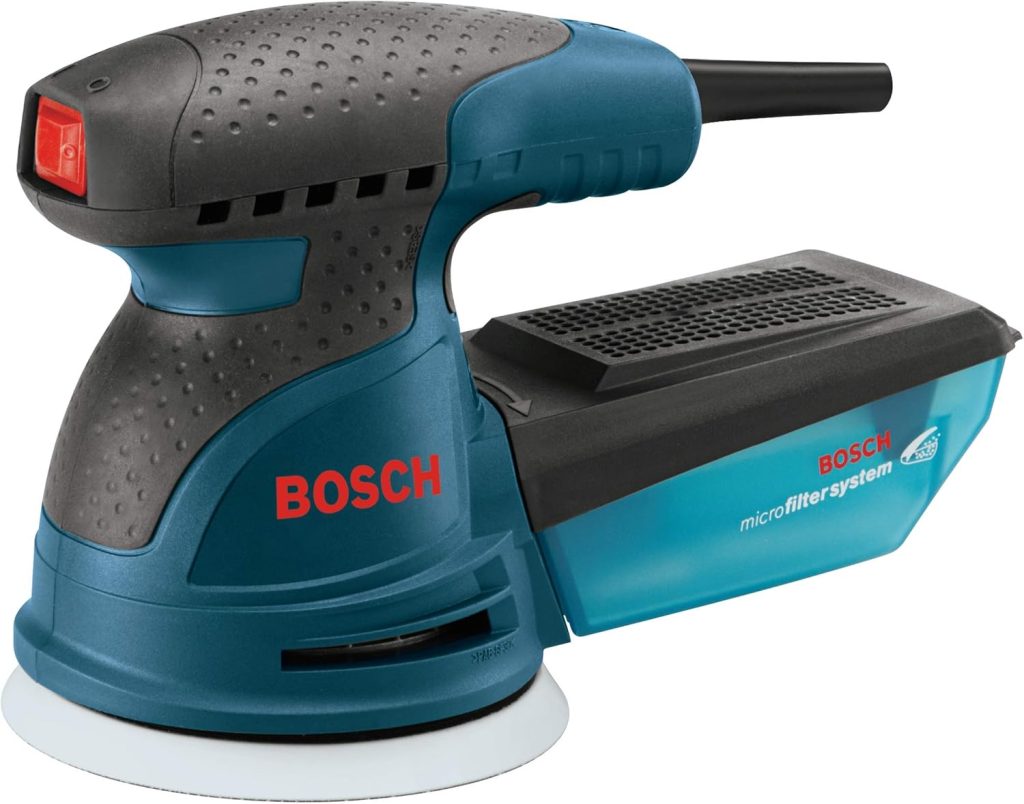
1. Bosch ROS20VSC 5-Inch Random Orbit Sander
| Specification |
| Type | Random Orbit |
| Power | Corded (2.5 Amp motor) |
| Speed | 7500 – 12000 RPM |
| Pad Size | 5 inches |
| Weight | 3.5 lbs |
The Bosch ROS20VSC consistently earns top marks for its combination of performance, comfort, and value. It’s a workhorse that delivers a swirl-free finish thanks to its Pad Dampening System, which helps prevent gouging on the workpiece.
Its microfilter dust canister is surprisingly effective, capturing a significant amount of fine dust particles. This sander strikes the perfect balance for both enthusiastic DIYers and professional woodworkers.
Key Features
- Variable speed control (7,500-12,000 OPM) for versatile performance.
- Hook-and-loop disc attachment for quick and easy sandpaper changes.
- Microcellular backing pad ensures a smooth, fine finish on flat and contoured surfaces.
- Excellent dust collection system with a twist-off canister.
Pros
Cons
2. DeWalt DCW210D1 20V MAX Random Orbit Sander
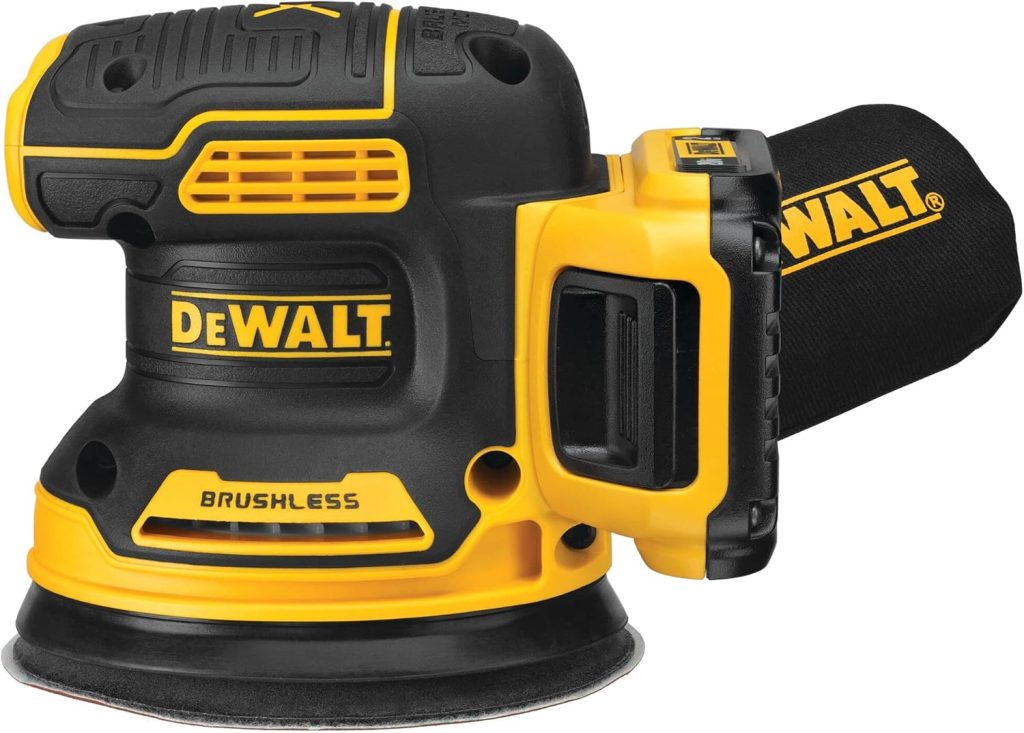
| Specification |
| Type | Random Orbit |
| Power | Cordless (20V MAX) |
| Speed | 8,000-12,000 OPM |
| Pad Size | 5 inches |
| Weight | 2.1 lbs (tool only) |
For those who value freedom of movement, the DeWalt DCW210D1 is the premier cordless sander for furniture projects. It leverages DeWalt’s powerful 20V MAX battery platform to deliver corded-like performance without the cord.
The brushless motor is efficient and durable, providing long run times. Its ergonomic design, with a low profile and comfortable rubber overmold, gives users exceptional control, making it a joy to use.
Key Features
- Brushless motor provides power and extends runtime.
- Variable speed dial offers control from 8,000 to 12,000 OPM.
- Low-profile height allows user to get closer to the work surface.
- Replaceable 8-hole hook-and-loop sanding pad.
- One-handed locking dust bag or can be attached to a vacuum.
Pros
Cons
3. BLACK+DECKER BDERO100 Random Orbit Sander
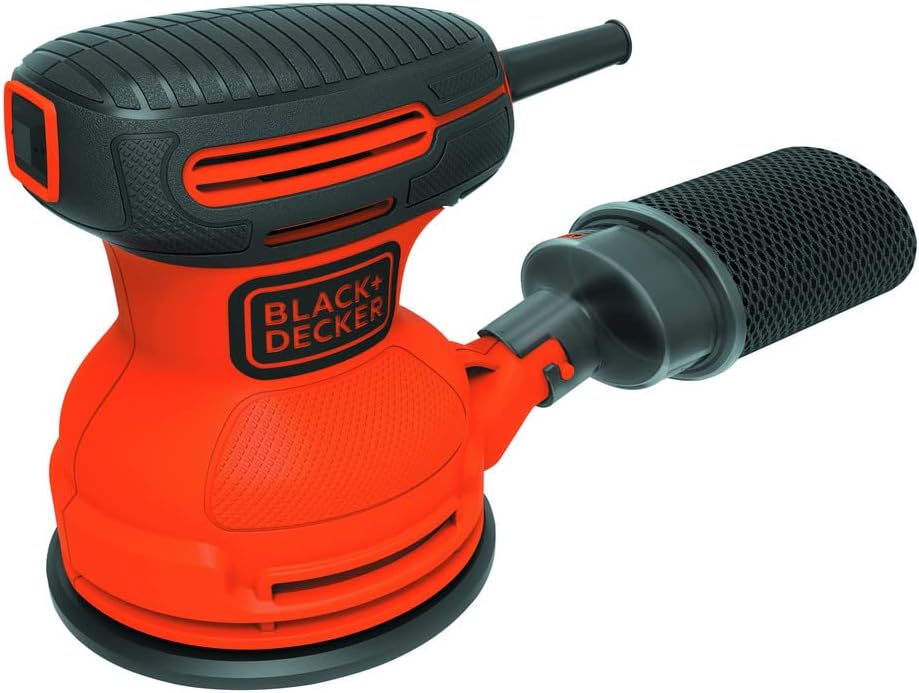
| Specification |
| Type | Random Orbit |
| Power | Corded (2.0 Amp motor) |
| Speed | 12,000 OPM (single speed) |
| Pad Size | 5 inches |
| Weight | 3.16 lbs |
Proving that you don’t need to spend a fortune for a capable tool, the BLACK+DECKER BDERO100 is an excellent entry-level option. It’s compact, lightweight, and incredibly easy to use, making it perfect for beginners or for quick DIY jobs.
While it lacks the variable speed and robust build of premium models, it performs admirably for general furniture refinishing and delivers a surprisingly good finish for its price.
Key Features
- Compact and ergonomic design for user comfort and control.
- High-performance random orbital action for fast material removal and a swirl-free finish.
- Hybrid dust canister captures dust effectively.
- Simple hook-and-loop system for paper changes.
Pros
Cons
4. Makita BO5041K 5-Inch Random Orbit Sander
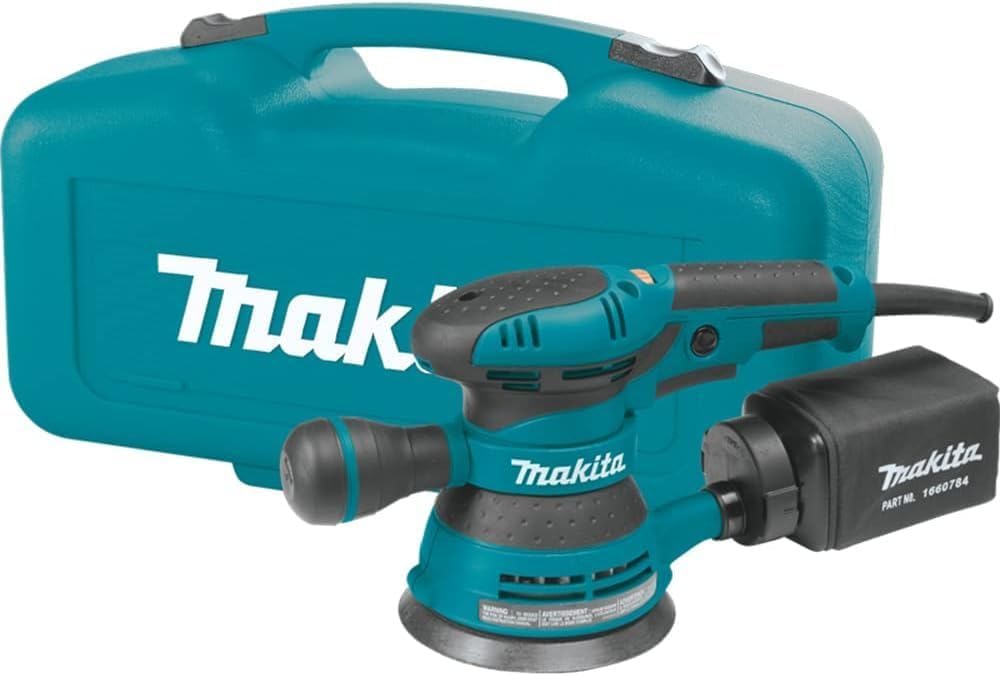
| Specification |
| Type | Random Orbit |
| Power | Corded (3.0 Amp motor) |
| Speed | 4,000-12,000 OPM |
| Pad Size | 5 inches |
| Weight | 3.9 lbs |
Makita is known for its high-quality, ergonomic tools, and the BO5041K is a prime example. What sets it apart is the adjustable front handle, which provides superior control and comfort during extended use, especially when working on vertical surfaces.
It combines a powerful 3.0 Amp motor with a well-designed variable speed control system, allowing for both aggressive sanding and delicate finishing. It’s a fantastic choice for those who prioritize comfort and precision.
Key Features
- Powerful 3.0 Amp motor for fast and smooth sanding.
- Variable speed control dial (4,000-12,000 OPM).
- Ergonomic rubberized palm grip and an adjustable front handle for added control.
- Pad control system for controlled pad speed upon start-up.
- High-capacity dust collection system with built-in vacuum port.
Pros
Cons
5. Festool ETS 125 REQ-Plus Random Orbit Sander
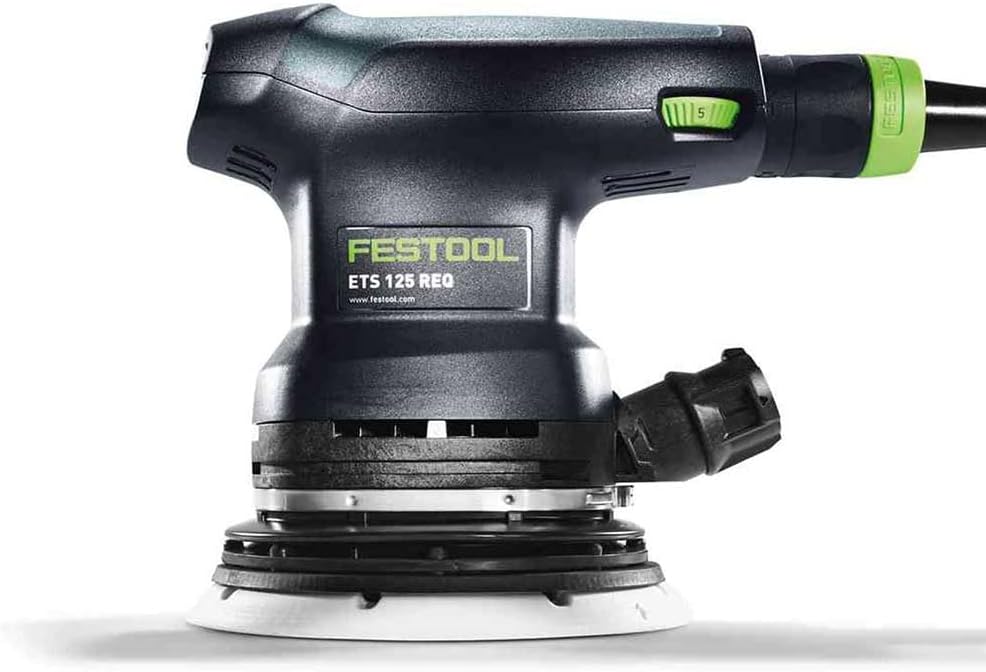
| Specification |
| Type | Random Orbit |
| Power | Corded |
| Speed | 6,000-12,000 OPM |
| Pad Size | 5 inches |
| Weight | 2.4 lbs |
Festool sanders are the gold standard for professional cabinet makers and furniture finishers, and for good reason. The ETS 125 REQ-Plus is exceptionally well-balanced, lightweight, and has virtually no vibration.
When paired with a Festool dust extractor, it offers near-perfect dust collection. The finish quality is second to none. While the price is steep, for professionals whose livelihood depends on flawless results, the investment is easily justified.
Key Features
- Compact, ergonomic, and lightweight design for one-handed use.
- MMC Electronics provide variable speed and constant speed under load.
- Jetstream design delivers highly efficient dust removal.
- Vibration-stop balancing for smooth operation and reduced fatigue.
Pros
Cons
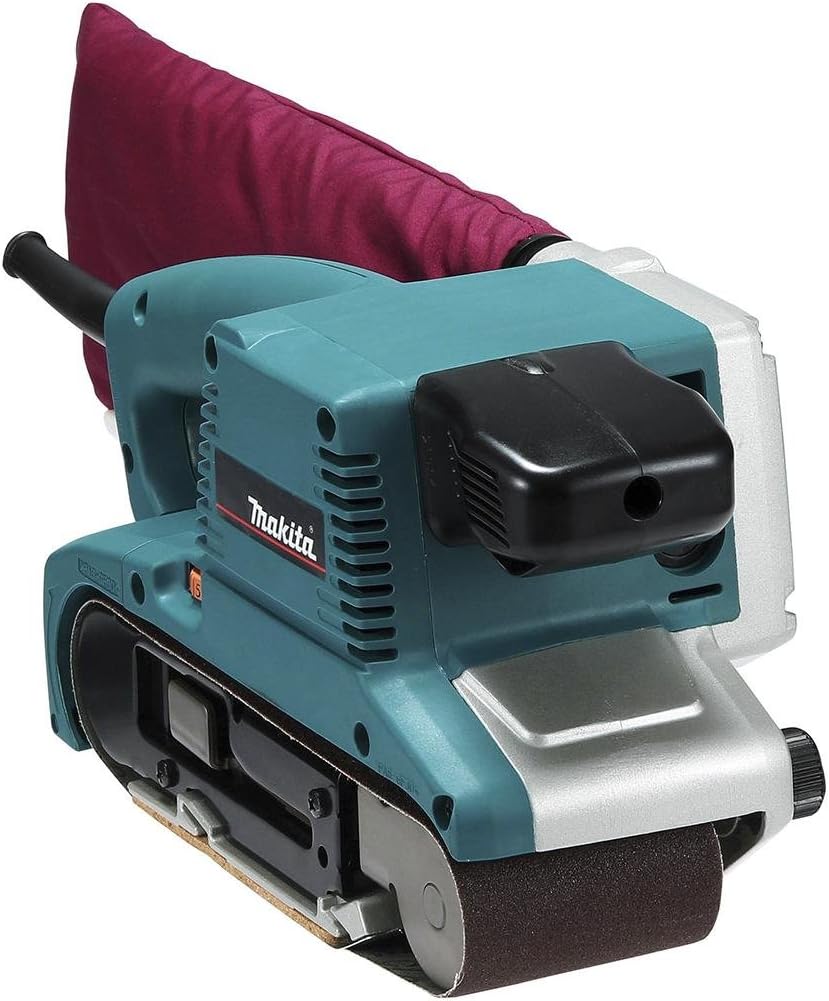
6. Makita 9903 Belt Sander
| Specification |
| Type | Belt Sander |
| Power | Corded (8.8 Amp motor) |
| Speed | 690-1,440 ft./min. |
| Belt Size | 5 i3 in x 21 in |
| Weight | 9.5 lbs |
When you need raw power to strip layers of old paint or level a rough tabletop, the Makita 9903 belt sander for woodworking is the answer. It features a robust 8.8 Amp motor and an auto-tracking belt system that keeps the sanding belt centered without constant adjustment.
Its relatively low-profile design and quiet operation (for a belt sander) make it more user-friendly than many of its competitors. It’s the perfect tool for the heavy-lifting phase of a project.
Key Features
- Powerful 8.8 Amp motor.
- Variable speed control (690-1,440 ft./min.) to match the speed to the application.
- Auto-tracking belt system requires no adjustment.
- Front grip for comfortable operation.
- Designed for flush-to-wall sanding.
Pros
Cons
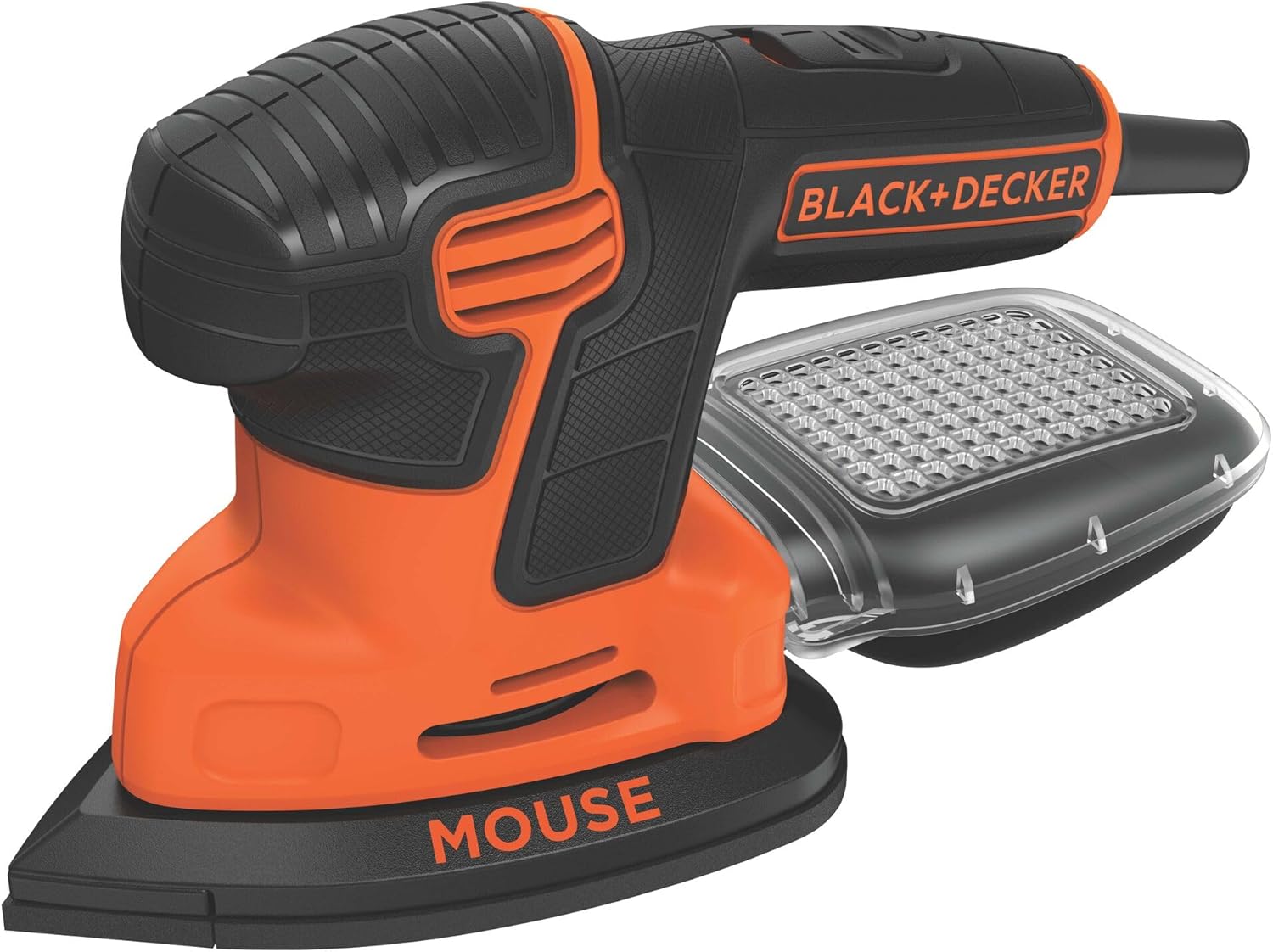
7. BLACK+DECKER BDEMS600 Mouse Detail Sander
| Specification |
| Type | Mouse Sander |
| Power | Corded (1.2 Amp motor) |
| Speed | 14,000 OPM |
| Pad Size | proprietary shape |
| Weight | 2.8 lbs |
The BLACK+DECKER Mouse is an iconic detail sander for wood furniture. Its compact size and pointed tip allow it to access areas that are impossible to reach with a round or square sander.
This model includes a finger attachment for ultra-fine detail sanding. It’s an indispensable tool for refinishing chairs with intricate spindles, louvered doors, or any piece with complex shapes. It’s the ideal companion to a larger primary sander.
Key Features
- 3-position grip for control and ease of use in various orientations.
- Compact and ergonomic design.
- Includes a finger attachment for getting into tiny spaces.
- High-performance dust collection with micro-filtration.
Pros
Cons
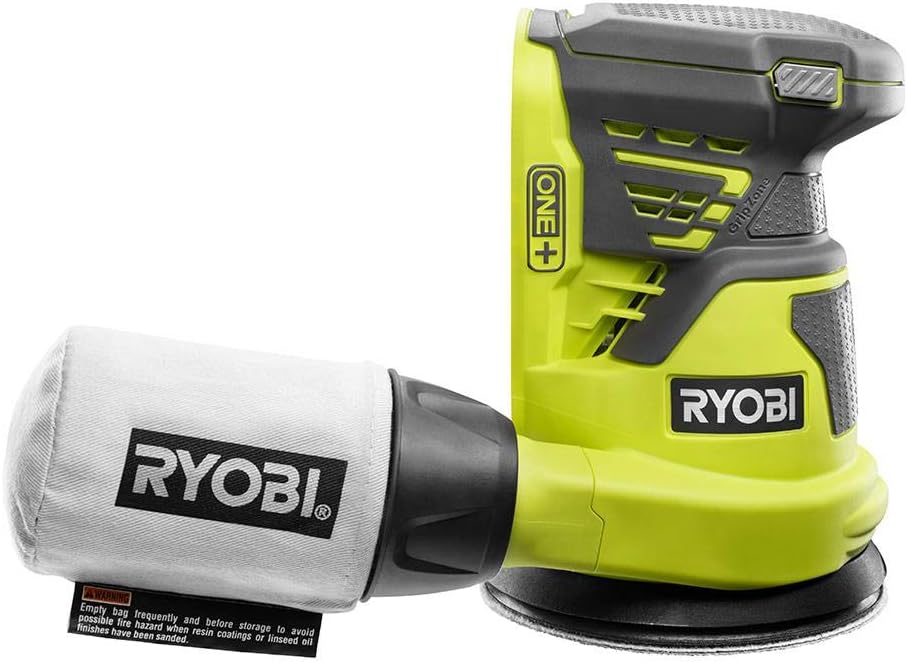
8. Ryobi P411 18V Cordless Random Orbit Sander
| Specification |
| Type | Random Orbit |
| Power | Cordless (18V) |
| Speed | 10,000 OPM (single speed) |
| Pad Size | 5 inches |
| Weight | 2.75 lbs |
Part of Ryobi’s extensive 18V ONE+ system, the P411 offers incredible value for a cordless sander. It provides the convenience of cordless operation at a fraction of the cost of professional models.
While it may not have the runtime or power of the DeWalt, it’s more than capable for most DIY furniture projects. If you’re already invested in the Ryobi battery platform, this tool is a no-brainer addition to your collection.
Key Features
- Up to 40 minutes of runtime with a 4.0 Ah battery.
- Onboard dust collection bag.
- Comfortable grip for extended use.
- Part of the massive Ryobi ONE+ battery system.
Pros
Cons
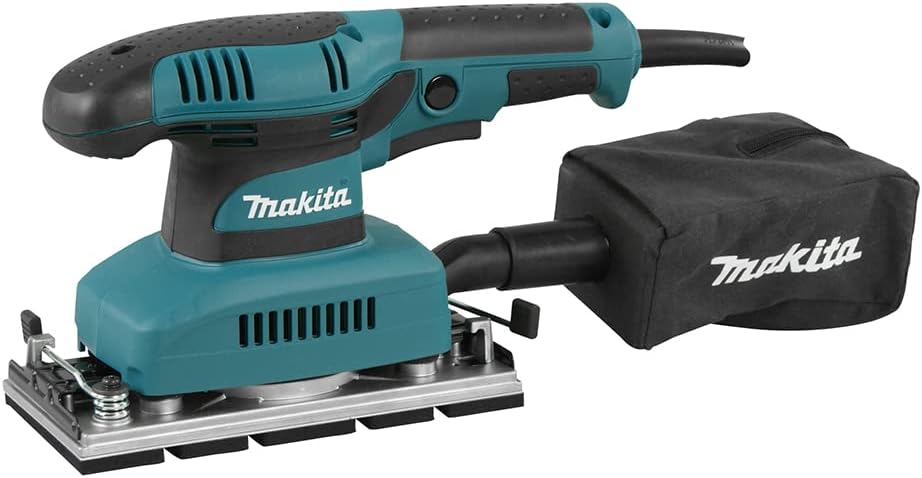
9. Makita BO3710 Finishing Sander
| Specification |
| Type | Finishing / Sheet Sander |
| Power | Corded (1.7 Amp motor) |
| Speed | 11,000 OPM |
| Pad Size | 1/3 Sheet |
| Weight | 3.3 lbs |
For those who prefer a traditional finishing sander for smooth surfaces, the Makita BO3710 is a top-tier choice. This 1/3 sheet sander is engineered for low vibration and low noise, making it comfortable for long finishing sessions.
The large clamping levers make changing standard sandpaper sheets quick and easy. It excels at producing a glass-smooth surface right before staining or painting, and is an excellent palm sander for furniture refinishing.
Key Features
- Engineered for lower noise and reduced vibration.
- Efficient through-the-pad dust collection system.
- Large clamping levers for fast and easy paper installation.
- Ergonomic, contoured grip with rubberized soft grip.
Pros
Cons
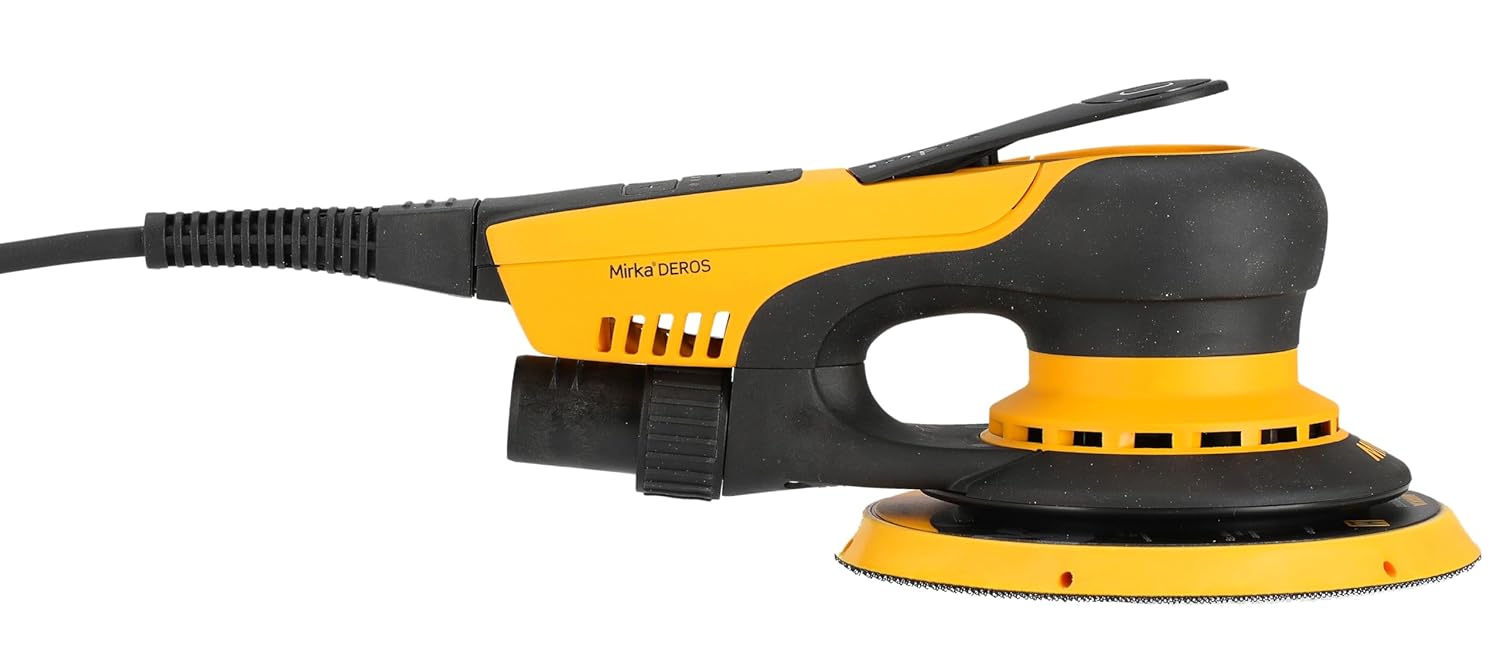
10. Mirka DEROS 650CV Random Orbit Sander
| Specification |
| Type | Random Orbit |
| Power | Corded (Brushless DC motor) |
| Speed | 4,000-10,000 OPM |
| Pad Size | 6 inches |
| Weight | 2.2 lbs |
Mirka revolutionized the sanding world with the DEROS. It is an incredibly lightweight, compact, and powerful brushless electric sander that feels more like an air tool. The ergonomics are unparalleled, and the low-vibration performance is best-in-class, rivaling even Festool.
It’s designed to be used with Mirka’s Abranet abrasive mesh discs and a dust extractor for a truly dust-free sanding experience. This is a premium tool for serious hobbyists and professionals seeking the ultimate in performance and comfort.
Key Features
- Powerful and compact brushless motor.
- Extremely lightweight and ergonomic design.
- Very low vibration levels.
- Bluetooth connectivity to track vibration exposure via an app.
- Designed for a dust-free system with Mirka’s net abrasives.
Pros
Cons
Comparison Table: Top 10 Sanders for Furniture
| Sander Model | Type | Power | Best For | Pros | Cons |
| Bosch ROS20VSC | Random Orbit | Corded | Overall Performance & Value | Great finish, effective dust collection, good value | Can feel slightly underpowered for heavy removal |
| DeWalt DCW210D1 | Random Orbit | Cordless | Cordless Convenience & Power | Powerful, ergonomic, excellent control, long runtime | Expensive, battery & charger sold separately in some kits |
| BLACK+DECKER BDERO100 | Random Orbit | Corded | Budget-Friendly Projects | Very affordable, lightweight, easy to use | Single speed, less durable, basic dust collection |
| Makita BO5041K | Random Orbit | Corded | Control & Ergonomics | Adjustable front handle, powerful motor, variable speed | Heavier than some competitors |
| Festool ETS 125 REQ-Plus | Random Orbit | Corded | Professional, Flawless Finishes | Flawless finish, virtually no vibration, amazing dust collection | Very expensive, best with Festool dust extractor |
| Makita 9903 | Belt Sander | Corded | Heavy Material Removal | Powerful, auto-tracking belt, relatively quiet | Heavy, too aggressive for fine finishing |
| BLACK+DECKER BDEMS600 | Detail | Corded | Corners & Intricate Details | Reaches tight spaces, includes detail finger, affordable | Limited to small areas, not for large surfaces |
| Ryobi P411 | Random Orbit | Cordless | Best Value Cordless | Great price, part of a huge battery system, convenient | Single speed, shorter runtime than premium models |
| Makita BO3710 | Finishing | Corded | Ultra-Smooth Final Sanding | Low vibration, quiet, great for final prep, easy paper changes | Less aggressive than random orbit sanders |
| Mirka DEROS 650CV | Random Orbit | Corded | Premium Lightweight Performance | Incredibly lightweight, low vibration, superior ergonomics | Premium price, requires dust extractor for best results |
How to Sand Furniture Properly (Step-by-Step Guide)
Owning the best sander is only half the battle. Using the correct technique is essential for a professional finish.
- Preparation is Key
Start by cleaning the furniture thoroughly with a degreasing cleaner to remove any dirt, wax, or polish. Make any necessary repairs, like filling holes with wood putty, before you begin sanding. Set up in a well-ventilated area and put on your safety gear: a dust mask or respirator, safety glasses, and hearing protection.
- Choose Your Grit
Sandpaper is categorized by its grit number. Lower numbers (60-80 grit) are coarse and used for removing old finishes and heavy stock. Medium grits (100-150) are for general smoothing. Fine grits (180-220 and above) are for the final passes before applying stain or paint. Always start with the lowest grit necessary for the job and work your way up.
- Start Sanding
If you are stripping an old finish, you might begin with a belt sander or a random orbit sander with 80-grit paper. If the surface is already in good shape, you can start with 120-grit.
- Keep it Moving
Never let the sander rest in one spot. Keep it moving continuously in the direction of the wood grain. For a random orbit sander, the motion helps, but you should still guide it slowly and evenly across the surface. Overlap your passes by about half the width of the sanding pad to ensure even coverage.
- Progress Through the Grits
After sanding the entire piece with your starting grit, clean off all the dust with a vacuum and a tack cloth. Then, switch to the next higher grit (e.g., from 120 to 180). Repeat the process, sanding the entire piece again. A typical progression for furniture is 120 -> 180 -> 220 grit. Do not skip grits.
- Hand Sanding for Details
Use a detail sander or sand by hand for curved legs, intricate carvings, and tight corners that your main sander cannot reach.
- Final Touches
After your final pass with the finest grit (usually 220 for most woods), vacuum the piece meticulously. Wipe it down with a tack cloth or a rag lightly dampened with mineral spirits to remove every last speck of dust. The surface should feel silky smooth. It is now ready for your choice of finish.
Maintenance & Safety Tips
- Safety First: Always wear a high-quality dust mask or respirator. Fine wood dust is a serious respiratory irritant and carcinogen. Safety glasses are also mandatory to protect your eyes from flying debris.
- Regular Cleaning: After each use, empty the dust canister and use compressed air or a vacuum to clean dust from the tool’s vents and housing. This prevents overheating and extends the motor’s life.
- Check the Pad: Periodically inspect the sander’s backing pad (the hook-and-loop part). If it becomes worn and no longer holds discs securely, replace it. A worn pad can cause poor sanding performance and damage your workpiece.
- Secure Your Work: Always clamp your furniture piece securely to a workbench. Trying to hold the piece with one hand while sanding with the other is dangerous and results in a poor-quality finish.
- Manage Your Cords: If using a corded sander, be mindful of the power cord to avoid tripping or sanding over it.
Conclusion
Choosing the right sander is a critical decision that directly impacts the quality and enjoyment of your furniture projects. As we’ve seen in the orbital vs belt sander for furniture debate, different tools serve very different purposes.
A powerful belt sander excels at rapid removal, while a versatile random orbital sander is the go-to for most smoothing tasks, and a detail sander is essential for the finishing touches.