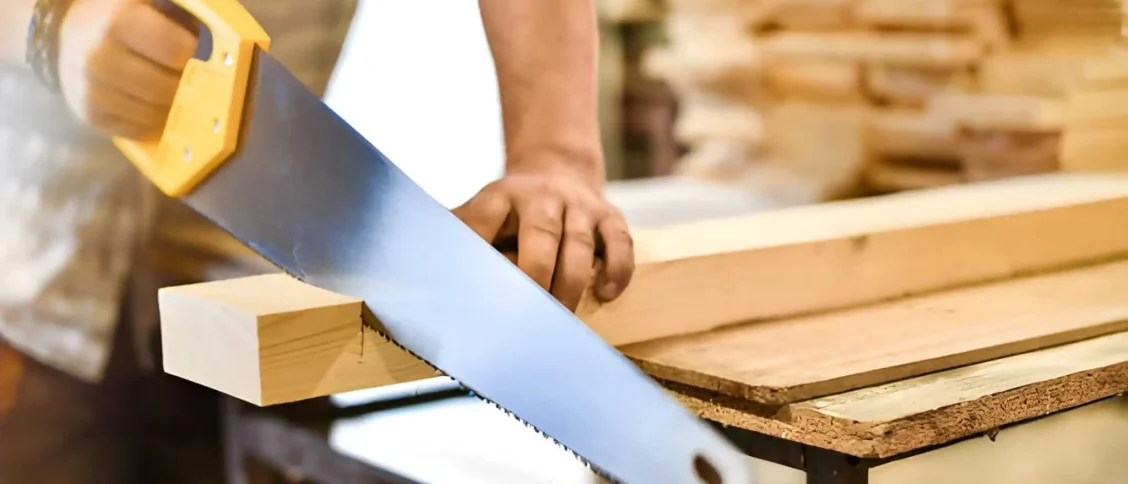

A bow saw is a big, robust saw with a unique bow-shaped metal frame that holds a coarse blade. Whether you’re cutting tree branches or breaking down logs for a fire, its main purpose is to cut through wood. Rapid, forceful cuts are possible with the tensioned blade. Unlike fine-toothed saws, bow saws remove big chunks quickly, making them a favorite for gardeners, landscapers, and campers who need to cut through unfamiliar wood grain or wet lumber.
The blade itself is replaceable, with popular sizes ranging from 21 to 36 inches. Users value this tool for its cutting speed, durability, and sheer versatility outdoors. A well-maintained bow saw can cut through many logs in a matter of minutes, making it a reliable tool for clearing trails and preparing firewood.
What is a Hacksaw?
Because of its U-shaped frame and replaceable patched blades, the hacksaw is the preferred handsaw for cutting metal. Its fine teeth let it to make controlled, accurate cuts with its stiff, narrow blade, which is usually 10 to 12 inches long. Though originally meant for metal, a hacksaw can also perform well on plastics, PVC, aluminum, and occasionally thin wood pieces.
Many variants are available, including adjustable-frame hacksaws that can fit different blade lengths or mini hacksaws suited for compact cuts. Professionals in plumbing, kit assembly, and small-scale fabrication highrely on hacksaws to create clean, burr-free cuts.
Key Differences Between Bow Saw and Hacksaw
| Feature | Bow Saw | Hacksaw |
|---|---|---|
| Frame Shape | Large, bow-shaped metal frame | U-shaped, compact, adjustable |
| Blade Size | 21–36 inches, coarse | 10–12 inches, fine-toothed |
| Cutting Targets | Logs, branches, thick wood | Metal pipes, rods, plastic, PVC |
| Teeth per Inch | Coarse, ~3 TPI | Fine, 24–32 TPI |
| Weight | 2–4 lbs | 1–2 lbs |
| Portability | Bulkier, made for outdoor use | Compact, easy to store and transport |
| Typical Use | Gardening, camping, forestry | Plumbing, metalwork, DIY projects |
Bow Saw vs Hacksaw: Performance Face-Off
When compared to one another:
Wood Cutting Efficiency
- The bow saw excels in fast, effortless cuts through logs and thick wood. Its wide blade delivers powerful strokes, reducing the time for each cut. Trying to use a hacksaw on logs? Expect slow progress and a dull blade in no time.
Metal Cutting Comparison
- Hacksaws are purpose-built for metal. Their fine-toothed blade glides through steel pipes and rods with minimal effort. A bow saw will struggle; the coarse blade and large frame aren’t up to the task.
Indoor vs Outdoor Use
- Bow saws thrive outdoors, for camping, trail maintenance, and yard cleanup. Hacksaws, on the other hand, live indoors in workshops or tool belts for precision tasks.
Pros and Cons at a Glance
Bow Saw
- Pros: Strong, quick, replaceable blades, perfect for thick wood
- Cons: Heavy, unsuitable for metal, and weariness from prolonged usage on the hands
Hacksaw
- Pros: Great for metal/plastic, precise control, compact, blade variety
- Cons: Blades can break under strain and are slow in dense timber.
Which Saw is Best for Woodworking?
Woodworkers frequently deal with both finer joinery and crude cuts. The two are comparable as follows:
- Bow Saw: Best for rough shaping, log splitting, trimming thick branches, or cross-cutting. Its coarse teeth don’t deliver fine finishes but cut quickly and reliably.
- Hacksaw: Useful for detailed work, tiny wooden dowels, small trim pieces, or modifying metal hardware. It’s more of a niche tool in woodworking shops.
If your goal is major cuts (logs to planks), go for the bow saw. For light shaping or non-ferrous material, reach for the hacksaw.
CTA Button
Which Saw is Best for Metal Cutting?
When tackling small plumbing jobs, hardware fittings, or DIY projects with metal components, a hacksaw is your go-to tool:
- Cuts steel pipes, copper tubes, bolts, and metal bars cleanly.
- Use blades rated for high tensile strength for seamless results, perfect for plumbers, fabricators, or kits.
Bow saw? Even thin sheet metal cannot be penetrated by it. Use the hacksaw solely to cut metal.
Cost Comparison: Budget vs Premium Options (USD)
The prices for each type of saw in the US market are as follows:
Bow Saw
- Budget: $13–$25 (basic steel frame, non-folding, single blade)
- Mid-range: $26–$60 (ergonomic grip, folding design, rust-resistant)
- Premium: $61–$130+ (heavy-duty, professional-grade, multi-blade kits)
Hacksaw
- Budget: $7–$15 (plastic/metal frame, single blade, fixed tension)
- Mid-range: $16–$25 (adjustable frame, tensioner, comfort handle)
- Premium: $26–$40+ (high-tension alloy frame, multiple blades included, pro kits)
Pro Tip: If you’re a casual user, budget models work just fine. But if you’re cutting regularly or professionally, investing in a mid-range or premium saw can save time and strain.
Top Recommended Bow Saws in 2025
- Bahco 325‑23 Bow Saw: Heavy-duty cutting, replaceable blade, durable. – Check Prices on Amazon
- Fiskars 21‑inch Bow Saw: Lightweight with ergonomic handle. Ideal for casual users.
- Silky 330‑12‑SR: Premium, Japanese-styled bow saw, compact yet powerful.
CTA Button
Top Recommended Hacksaws in 2025
- Bahco 224‑22 Lightweight Hacksaw: Ideal for steel and pipe cutting. Includes blade kit. – View it now
- Stanley FatMax Adjustable Hacksaw: Adjustable length, high-tension frame for faster cuts
- Irwin Replacement Hacksaw Kit: Comes with multiple blades, trusted by experts.
CTA Button
Real-World Use Cases & Buyer Scenarios
Home DIYers
Bow saw for yard work, hacksaw for plumbing repairs, having one of each ensures readiness.
Gardeners & Campers
Bow saws clear hiking trails and prep campfire wood. Hacksaws fix tent frames or waterlines.
Mechanics & Metalworkers
A hacksaw is essential for cutting bolts, nuts, and exhausts. Bow saw? Not needed here.
By matching tools to purpose, you avoid frustration and unsafe practices.
Safety Tips for Using Each Saw
- Always wear gloves and safety goggles.
- Bow Saw: Use a two-handed grip, stable sawhorse support, and stand to avoid kickback
- Hacksaw: Secure your workpiece with a vise, use steady strokes, and replace bent/brittle blades
- Never force cuts; let the blade do the work; forcing increases the risk of breakage.
Maintenance & Blade Replacement
- Bow Saw: After each use, brush the blades clean, store them dry, and oil the frame to avoid rust
- Replace blades as soon as you’re grinding instead of cutting
- Hacksaw: Wipe blade after each use; store in a controlled environment
- Replace when blade teeth are dull or slipping; better to have a new blade than a wasted effort
Expert Verdict: When to Choose a Bow Saw vs Hacksaw
| Scenario | Choose Bow Saw | Choose Hacksaw |
|---|---|---|
| Rough cutting thick green or dry wood | ✅ Yes | ❌ No |
| Cutting steel pipes or metal rods | ❌ No | ✅ Yes |
| Portability for camping/gardening | ✅ Yes (within size limits) | ✅ Yes |
| Budget under 25$ | ✅ Budget bowsaw | ✅ Budget hacksaw |
| Precise, burr-free metal cuts | ❌ Not suitable | ✅ Ideal |
Where to Buy: Best Online Deals for 2025
Shop confidently; here are trusted sources:
- Amazon: Wide variety, fast delivery, reviews at your fingertips
- Flipkart & Bajaj: Great for budget and mid-range picks
- Local Hardware Stores: Test grip and feel before buying
- Manufacturer Stores: For warranty and official blade packs
CTA Button: Buy Now!
FAQs: Bow Saw vs Hacksaw
Can a hacksaw cut branches?
No. The fine blade gets stuck in wood fibers and dulls quickly. Stick to a bowsaw for that task.
Will a bowsaw cut metal with a specially designed blade?
Even with a metal blade, the large frame and motion aren’t ideal. It’s better to use a hacksaw.
How often should I replace blades?
Replace form once teeth become dull, skipping squarely through the material. Daily to weekly use means frequent replacement.
Are folding bowsaws worth it?
Yes, compact and safer to store while maintaining cutting performance.
Can I sharpen a hacksaw blade?
No, multi-toothed fine blades don’t sharpen well. Replace them instead.
Which is safer for beginners?
Hacksaws tend to be more controlled for metal. Bowsaws require more muscle but are easy to handle for stable cuts.
Final Thoughts: Ready to Buy?
Ready to solve your cutting needs?
- Logs & limbs → Go with a bow saw
- Pipes & rods → Choose a hacksaw
Both are essential tools; even keeping both in your toolkit ensures you’re prepared for almost any project.
Looking for expert-level tools? Don’t wait; grab the top-rated bowsaw or hacksaw now and upgrade your workshop!
CTA Button
Choose your tool wisely, enjoy safer cuts, and happy building!